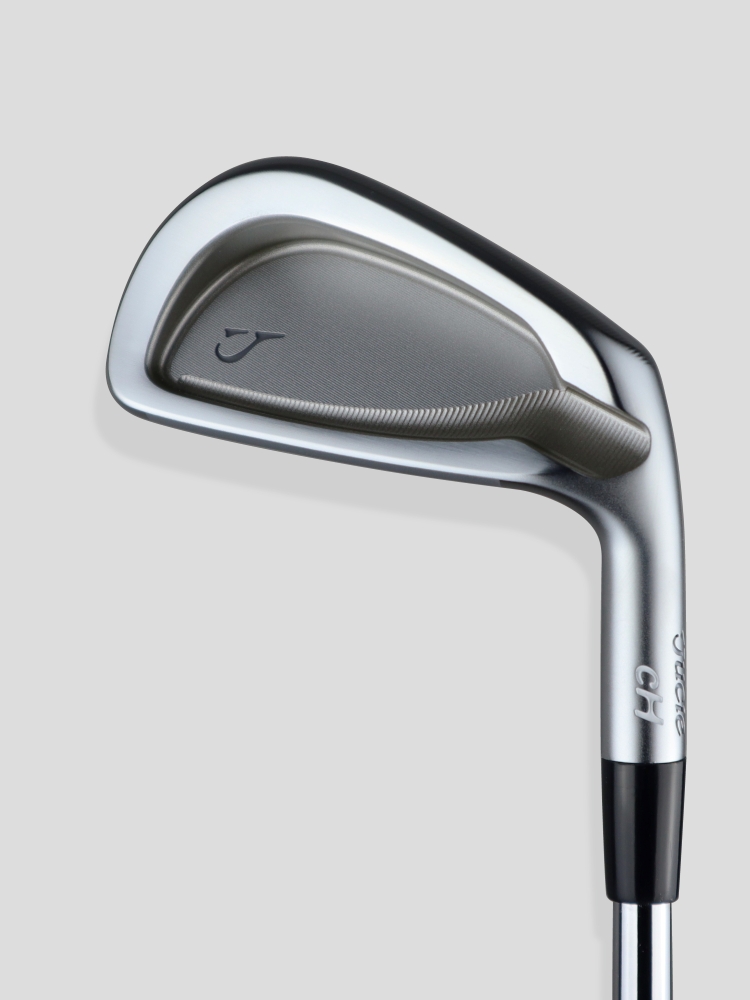
Juicy Co., Ltd. will begin selling its first cavity-back iron set, the "cH Irons," as part of its new lineup starting in April 2026. Please see the press release here for details.
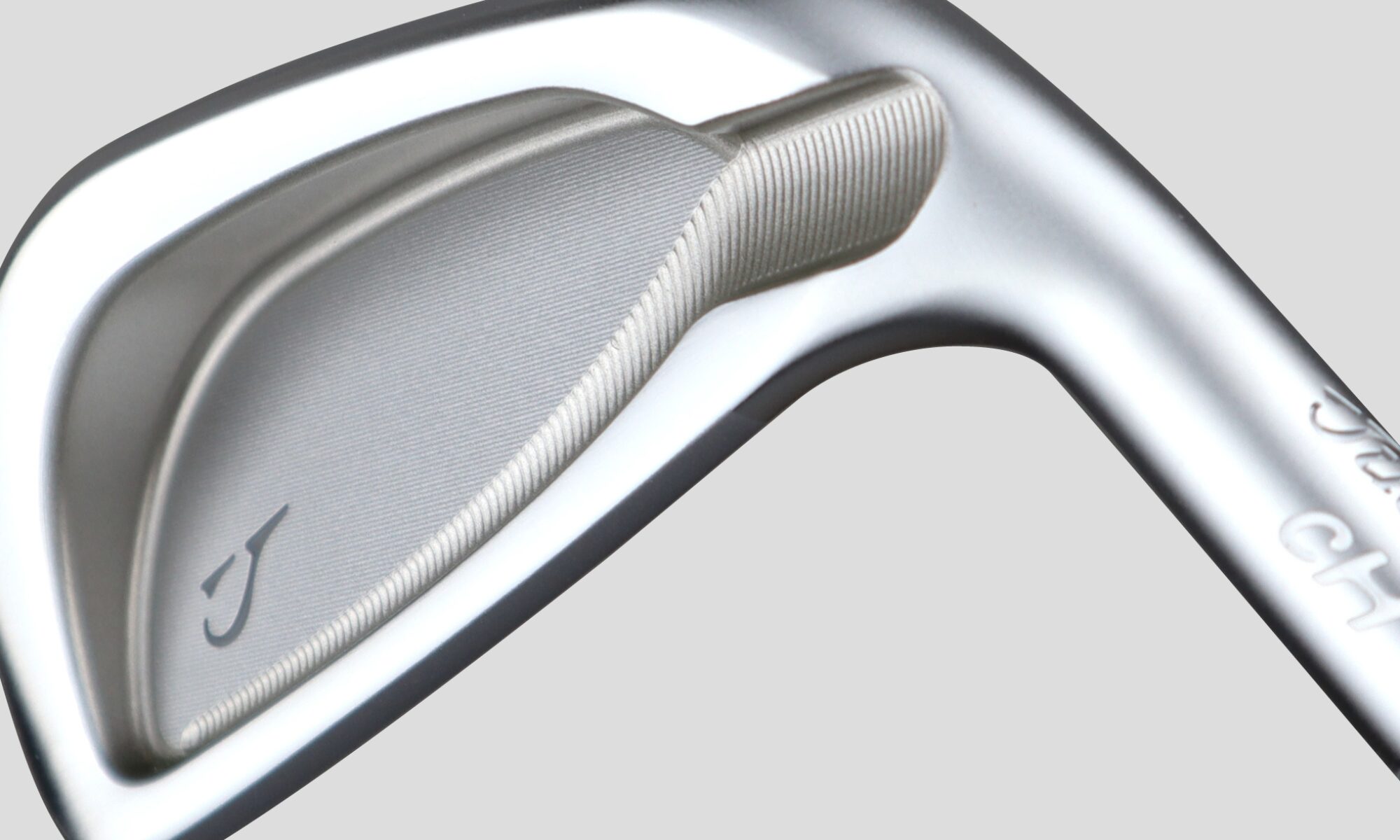

Join us for Jucie golf life.
Juicy Co., Ltd. will begin selling its first cavity-back iron set, the "cH Irons," as part of its new lineup starting in April 2026. Please see the press release here for details.
Hello, this is tK, the blog manager.
Things have taken a sudden turn since the last blog post.
"The near-final version has arrived."
We received word from Mr. Matsuyoshi, and a little while ago, we were shown just the header.
Then, right at the deadline for this blog post, he called and asked, "Do you want to publish it?"
Of course I do!
"Please, let me publish it!"
I practically begged him, leaning forward eagerly.
Dear readers, I'm truly sorry.
I went ahead and published it a little early.
This time, it's the "Fastest Test Impression."
※ I believe Mr. Matsuyoshi will cover the deeper design aspects in future updates, so I'd like to share my impressions purely as a golfer (and as a self-proclaimed #1 fan in Japan).
First, the moment I saw them:
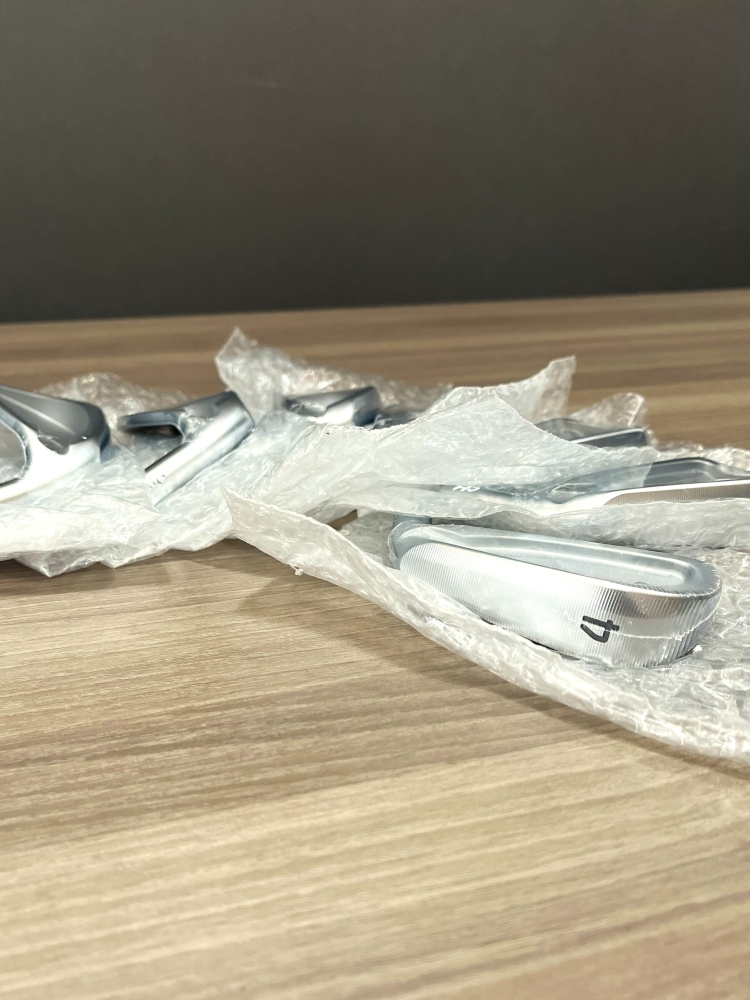
I threw everything from the 4-iron to the PW into my caddy bag for now.
The moment I removed all the iron covers and saw the new irons lined up as clubs again.
Yeah, they look awesome... tears.
They're not flashy. They're not over-the-top.
But they definitely have presence and a sense of luxury.
And above all, you instantly know, "These are JUCIE."
Differentiation in the backface isn't the focus of this model, but as a golfer, the appearance of the clubs lined up in my caddy bag is a crucial point that heightens my sense of ownership and satisfaction.
They've got that covered too—truly impressive.
This is apparently the near-final version, but they still plan to make adjustments before the final product.
After hearing the explanation, I thought, "They go that far, huh?"
I really felt there was absolutely no compromise.
Is the "Reiwa Handsome Guy" Really Handsome?
When I first heard the term " Reiwa Handsome Guy " and its concept, I was half excited and half anxious about what it would actually look like.
But the moment I saw it, I understood.
Compared to the heads commonly circulating now, it definitely has its quirks.
But those quirks actually become its charm.
You know how some actors are like that? They seem distinctive at first glance, but they have this aura and are incredibly cool.
It's that kind of vibe.
Moreover, when you hold it—
it gives you an incredible sense of reassurance.
I think the head size plays a part, and so does the balance of the facial features. Both factors combined made me feel a strong sense of "kindness" emanating from this face.
When placed next to the tQ iron, their characters are so different you'd never believe they're from the same brand.
I think if someone tried to copy this, it'd just end up looking like some kind of awkward knockoff.
The moment I hit it, something felt off.
When I swung lightly from the PW, I knew instantly.
"Whoa, the flight is different."
This compares to the tQ irons I'm currently using, but I've also compared them to other brands' high moment of inertia irons.
Compared to the tQ iron, I think the slightly steeper loft also plays a role,
The launch comes out a bit lower than I imagined—
Then it shoots straight up into the sky.
It's like there's an invisible rail up there, and the ball races up it.
You know how roller coasters have that initial slow climb? If you imagine a rail like that, it's pretty close.
And as you move up to the 9-iron, 8-iron, and 7-iron, it surges forward just the same.
What's more, the ball keeps getting "stronger" and stronger.
When you switch from a mid-iron to a long iron,
"Whoa, it really flies that far!?"
If you're used to the smooth, beautiful ball flight of tQ irons, the club number and the ball's momentum don't match up at first.
But it also feels different from what you'd call a distance-focused iron. I can't quite put my finger on it, but I think you'll understand once you hit it.
And before I knew it—
By this point, the quirky face of the Reiwa-era heartthrob felt like it had always been there, and I didn't notice it at all anymore.
Distance and Feel
I verified the distance at a range with TrackMan.
I felt each club gained 5 to 10 yards.
It launches a bit lower, then soars up the rail, making it easy to gain distance.
It gives the impression of being relatively easy to hit with a trajectory like a tour ball.
And it feels great without compromising the feel.
The softness of the soft iron is definitely there.
Just hearing the term "high moment of inertia," I imagined the feel might suffer a bit, but I was completely wrong.
I feel this construction is only possible because JUCIE consistently uses FULL CNC machining.
It's like a high-end car with air suspension.
When you make clean contact,
it feels like the entire clubhead envelops the ball.
The deep center of gravity brings to mind a fairway wood.
It's mild yet has a solid core.
The "comfort" Mr. Matsuyoshi mentioned in his recent blog post.
Honestly, I could feel it was a perfect fit.
Not just easy to swing, but one that feels great when you let it work.
I think the "comfort" you feel can vary significantly depending on which shaft you choose.
Please enjoy imagining things like:
"Should I stick with the same shaft?"
"Or should I go for a slightly more forgiving spec to pursue comfort?"
I'm really looking forward to the course.
This time it's the driving range, so my impressions will be based on range balls.
But it reminded me.
Of the first time I used the tQ irons on the course.
I was mesmerized by the beauty of that ball flight.
I wonder what the new irons will be like.
I'm sure they'll bring a whole new kind of excitement.
Right now, imagining that is the most fun part.
The merits of the tQ irons, and the merits of these new irons.
Since each has its own distinct character, which one to use?
I'm looking forward to figuring out how to use them.
Finally,
We recommend trying this iron out firsthand rather than just looking at specs and performance numbers. And the final form, after its last fine-tuning before release, will arrive in your hands looking even better.
Reaching this stage means you should be able to try it out yourselves very soon.
Please experience a new facet of JUCIE for yourself.
We also look forward to sharing how it performs on the course.
In February 2026, Juicy Inc. celebrated its 8th anniversary. We are truly grateful to the many people who have supported us in advancing this "Juicy Project."
Golf clubs aren't just products!
Amidst this, I was very fortunate earlier this year to have an article featuring me as a club designer published in Golf Digest Japan. During that interview, I was asked, "What is your design philosophy?" I answered that I fundamentally aim to create tools that are easy for users to handle, always designing with the mindset that they are "tools for use," not "products for sale."
Afterwards, I took time to reflect anew on my own philosophy and what Juicy truly stands for.
We certainly aimed to create a comfortable club by incorporating as many thoughtful details as possible for our target users. However, as we prioritized clarity, we found ourselves unknowingly conforming to a product-centric categorization. Disliking this, I reaffirmed why I started the Juicy Project anew.
The pursuit of comfort has nothing to do with golf skill level. Ultimately, we want people to choose Juicy as their very first golf club.Rather than struggling with ill-fitting or difficult clubs during practice, I want people to enjoy comfortable golf from the very start. That's what I'm thinking about. And for professional golfers, comfort means reliability—the crucial balance of precision and performance. Golfers of all levels have their own individuality, and many seek high-quality comfort. My commitment with Juicy is to design golf clubs with new performance for precisely those people.
Comfortable Golfer
We came up with a new term to describe the golfer image Juicy aims for in a single phrase.
"Comfortable Golfer"
So, we immediately asked the AI, "What is a Comfortable Golfer?" The result was:
・It refers to a style of enjoying golf while valuing comfort, ease, and being true to oneself, or to the golfer who embodies that style.
・Choosing the right gear: Selecting clubs with appropriate weight and shafts that match your swing tempo and power.
・Mental and physical comfort: Playing with relaxed, natural movements (a comfortable swing) rather than forcing power.
・Enjoyment mindset: Enjoy the time spent amidst beautiful scenery and nature itself, not just chasing scores.
・Comfort in golf emphasizes not only skill improvement but also health, fashion, and mental fulfillment.
Summary
A Comfortable Golfer is someone who truly enjoys the sport of golf with comfortable equipment and a positive mental state.
That was the response. AI is amazing, isn't it? It provided a perspective that closely matches the image of a golfer I had in mind.
With 30 Years of Passion
As mentioned at the beginning, Juicy is entering its ninth year, and simultaneously, I am entering my 30th year of golf club design. Looking back, over these 30 years, I have designed over 60 different iron sets and over 50 different wedge series models.Since becoming Juicy, I've already designed over 10 iron models alone.
Among these, I've now designed an iron with performance characteristics I'd never been able to create before. It embodies the performance I genuinely desired before I understood the manufacturer's perspective. To put it simply, it's the performance needed by golfers who have "decently fast head speed but also make a lot of mistakes."Thirty years ago, such clubs existed to some extent. However, within the brands I worked for, this performance was deemed "unmarketable," and I never got the chance to pursue this dream.
Yet, in this Reiwa era, with new golfers increasing and even top pros using high-moment-of-inertia drivers, I firmly believe this performance will be accepted.
I re-examined every element from scratch, revisited and studied past great clubs, and ultimately created an iron with a significantly different face shape than anything I'd done before – a "Reiwa-era handsome guy" in my mind. It maintains a comfortable size for solid play on the course while achieving the maximum possible moment of inertia for that size. It's crafted in a juicy style, precision-machined from soft iron using FULL CNC.Truthfully, the concept was complete in my mind three years ago, but through deeper precision and physical analysis, it has finally achieved its beloved performance.
The ability to design clubs with the performance I personally desire, even if they might lack market appeal.
I am truly happy. Once again, please allow me to express my gratitude to those who love Juicy clubs, those who support the Juicy Project, and those who nurtured me. Please wait just a little longer for the new iron announcement!
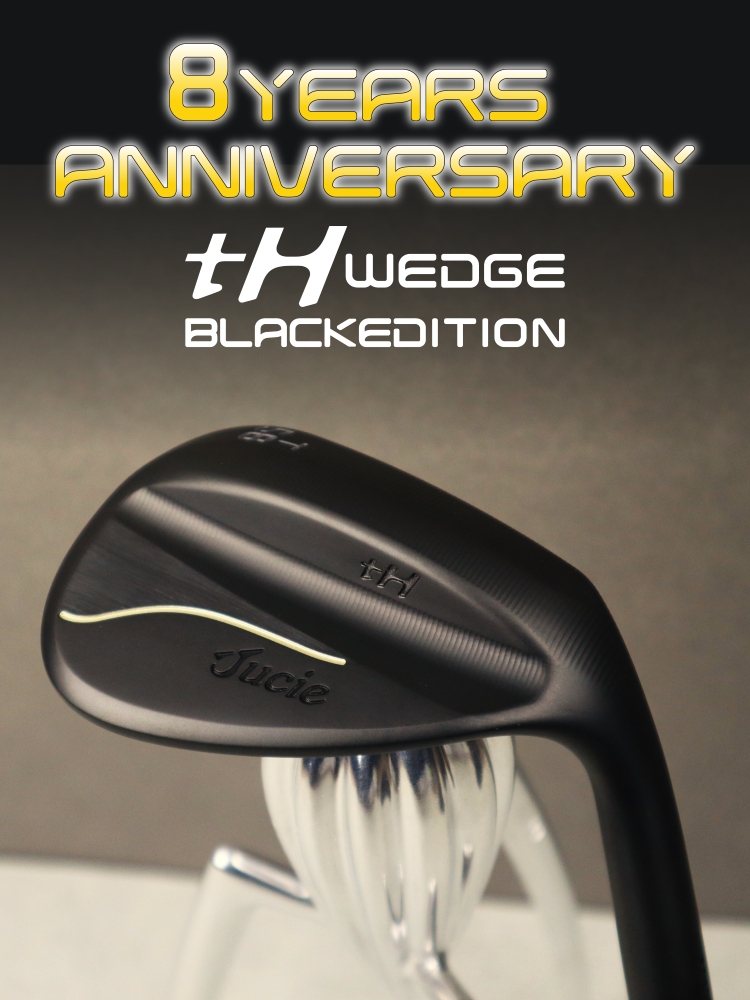
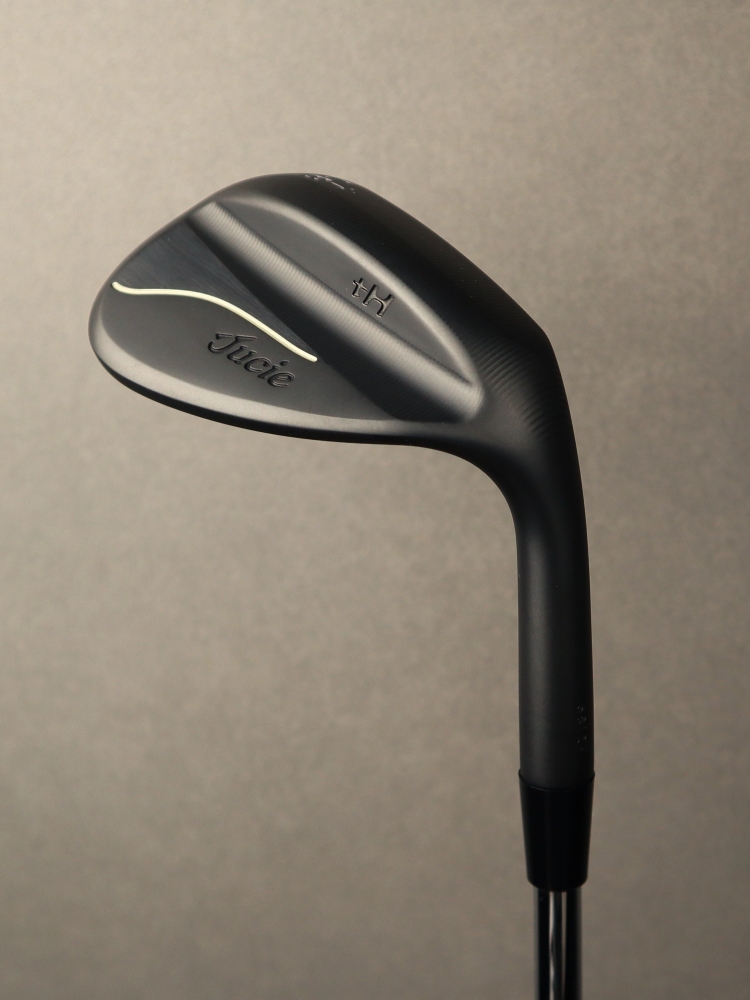
Juicy Inc. celebrated its 8th anniversary in February 2026. To express our gratitude, we are offering a limited quantity of the "tH Wedge Black Edition." For details, please see this News Release.
Hello, this is tK, the blog manager.
This blog post is a follow-up on JUCIE's new irons.
We've been getting some questions from readers of the previous article, like:
"What exactly is a Reiwa Handsome Guy!?"
...Yes. It couldn't possibly end there.
After that, I kept making little reconnaissance trips to Mr. Matsuyoshi to gather "bits of information" bit by bit.
This time too, I'll share only what I've been permitted to disclose as a follow-up update.
"Reiwa Handsome" and "Traditional Style"
What really catches my attention, though...
As mentioned last time, the upcoming new JUCIE irons will feature:
• Traditional Style
• Reiwa Handsome
Models embodying these two distinct directions will coexist.
Now, here's the main point.
Honestly, I can't help but be intrigued by "Reiwa Handsome."
Truthfully, when I first heard that term, I thought, "Uh, yeah..."(laugh).
But the more I heard about it, the more I realized this wasn't just a catchy name—
—it was a project with a truly ambitious goal.
The evolution of irons has "milestone models"
The term "game changer," which carries significant ambition, emerged during our conversation with Mr. Matsuyoshi.
Looking back at the history of irons,
it seems there have been several models that marked a turning point.
Which manufacturers shifted to what philosophy, and when?
Those who have enjoyed clubs for a long time
probably understand this much more intuitively than someone like me.
And "Reiwa Ikemen" is being developed with the aim of becoming the next game-changer in the Reiwa era, building on that legacy.
...It sounds simple enough, but it's actually quite remarkable, isn't it?
Technical Fragments
One specific example mentioned was the moment of inertia value.
Despite being a one-piece soft iron forged club,
• The moment of inertia for the 7-iron is approximately 2800 g·cm² (among the largest for soft iron head sizes)
Anyone who immediately understands the significance of this number alone must be someone with a truly deep passion for the craft.
In recent years, advances in 3D scanning technology have made it possible to replicate shapes.
After JUCIE's release, various manufacturers have been copying Mr. Matsuyoshi's designs.
Honestly, if it's just the shape, they'll imitate it right away.
But according to Mr. Matsuyoshi,
• Achieving the "look" of a modern handsome man
• Maintaining the same center of gravity design continued from the tQ iron
Even if the shape can be imitated, he states that imitation while achieving both of these is nearly impossible.
This area has a unique feel that's exclusive to JUCIE, which is incredibly gratifying for fans.
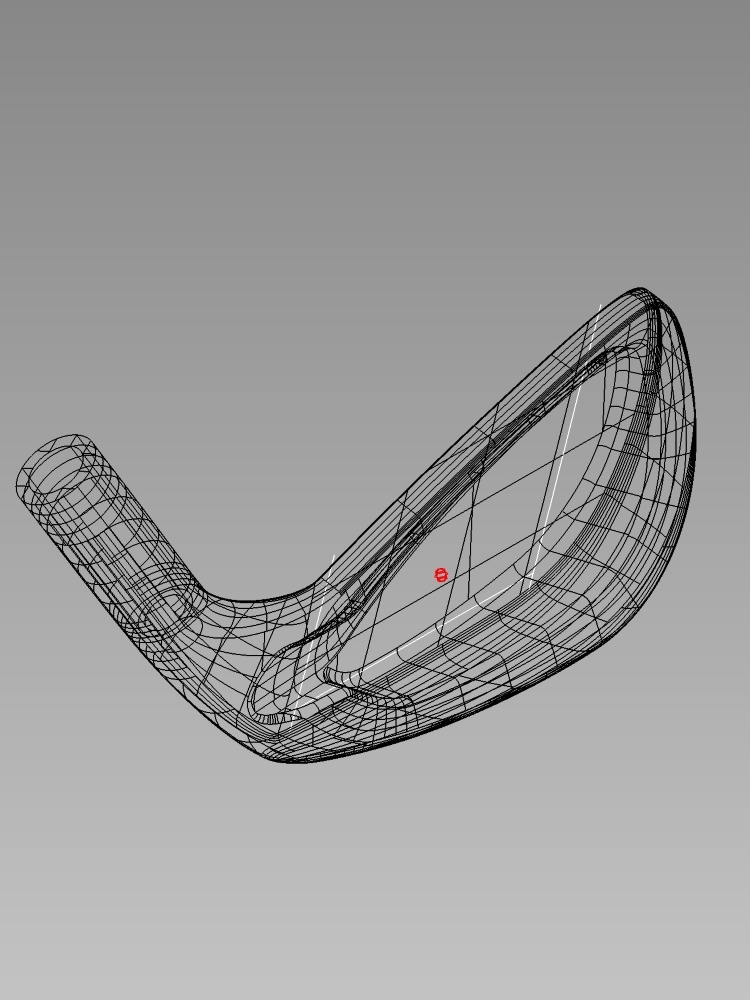
The shape is a cavity back.
However, I sensed a slightly different nuance compared to what's commonly called a "forgiving cavity."
Personally, the most surprising thing was the "loft settings."
And,
The thing that made me go "Huh?" the most this time was the loft settings.
• Reiwa Handsome: 31° on the 7-iron
• Orthodox: 29° on the 7-iron
I had completely imagined the opposite.
Apparently, considering how the clubs are loaded and the image of players using them on tour, this setting naturally follows.In other words, these two models aren't just:
• Different looks
• Different characters
They also have distinctly different "intended striking styles."
While appearance is certainly one entry point, ultimately the model choice comes down to "how you want to strike the ball."
This approach feels similar to how you choose a wedge sole.
Game changers are met with skepticism at first.
Mr. Matsuyoshi's offhand remark left a lasting impression.
Game-changing models are never immediately accepted in any era.
But before you know it, they become "the norm."
"Reiwa Handsome Guys" will likely spark debate. But that's fine.
That's the kind of project JUCIE is.
Mr. Matsuyoshi, who spoke these words, had a subtly amused look on his face.
Development Progress
The demo head was originally scheduled to arrive around the end of last year,
but the machining process is quite complex, and they haven't yet reached a final form they're satisfied with.
The more I hear about it, the more I just keep thinking, "I want to see it soon!" "I want to hit it soon!!"
Honestly, I came home feeling restless.
That said, there's also the expectation that I'll likely get to touch the real thing before too long,
so this excitement looks set to continue a little longer.
We'll bring you further updates.
While we haven't uncovered the full picture this time either, the outline is gradually becoming clearer.
We'll deliver more updates as soon as new information becomes available.
Next time, we may be able to delve a bit deeper.
We appreciate your continued support.