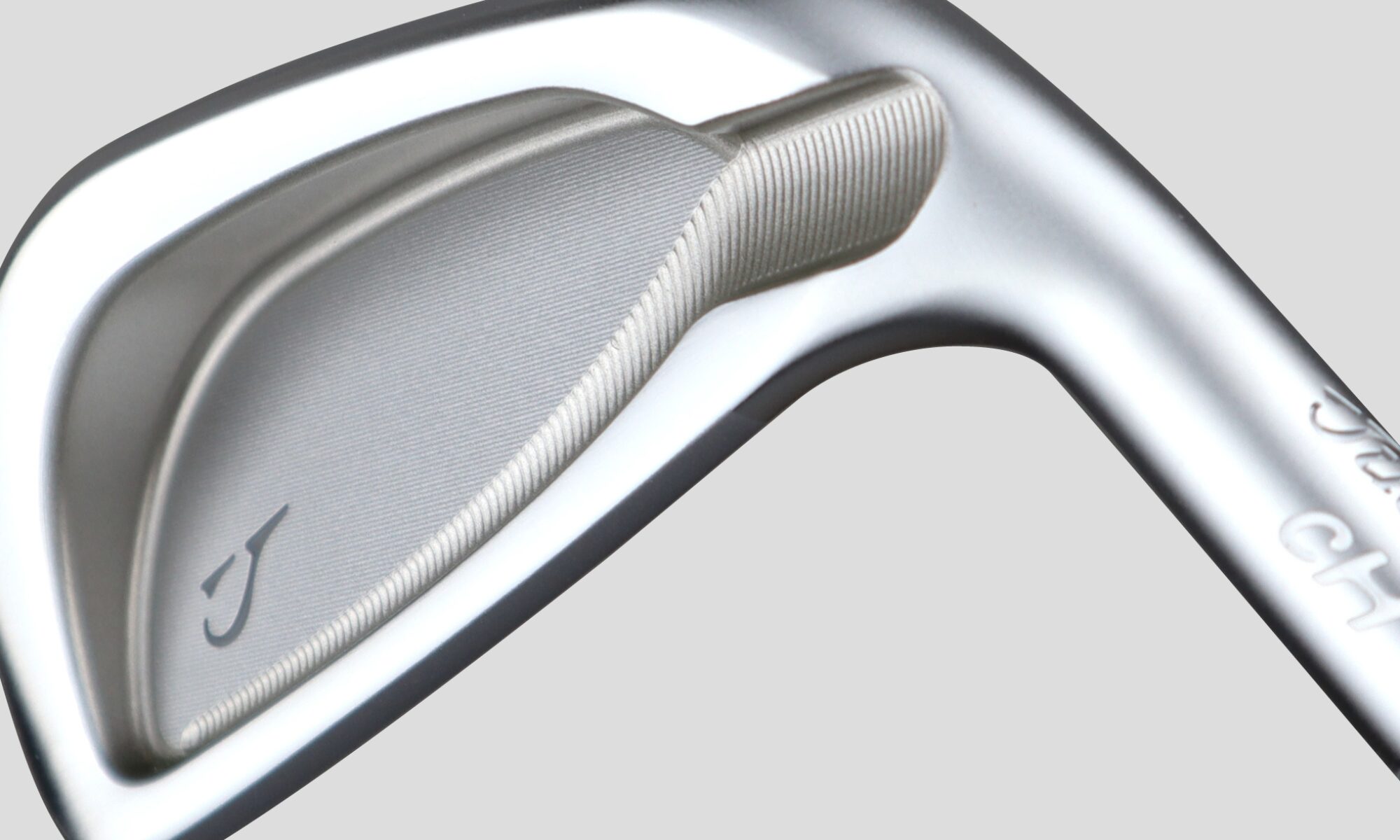

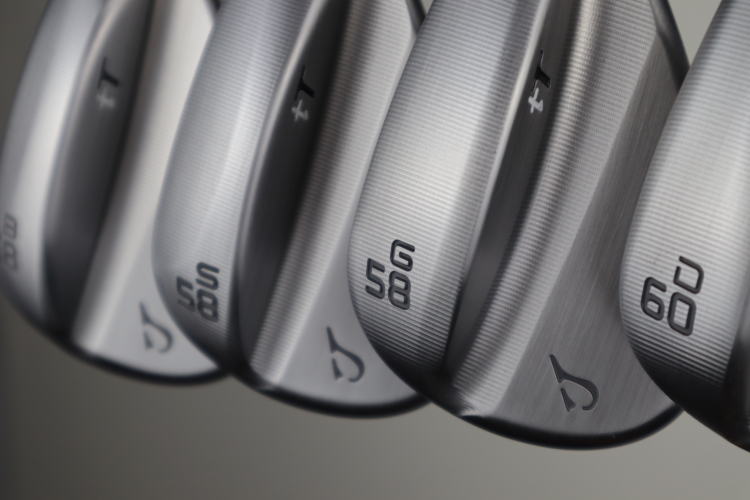
Hello, this is tK, the blog manager. Following the release of information about the new cH Irons, they are now on sale. Some of you may have already read the articles from the media launch event. By the way, Mr. Matsuyoshi gave various explanations during the event, and I must say, his talks are always fascinating no matter how many times I hear them. Even the media representatives, who were listening with some reserve at first, were completely engrossed by the middle of the presentation. Some of you may have already tried them out or even used them in play. I’m sure those of you who have have your own unique impressions.
Since I’ve actually used these irons on the course, I’d like to focus on how they performed out there and give you a thorough impression of the cH irons. I’m sure Mr. Matsuyoshi will continue to share plenty of details about the design and other technical aspects, so as usual, I’ll be sharing my personal experience from a user’s perspective.
On the course, it always exceeds expectations more than on the driving range. Last time, I shared my impressions from testing it on the driving range; this time, I’ll share my experience using it on the course. By the way, while this applies to all previous JUCIE models as well, I feel that JUCIE performs significantly better—both in terms of feel and results—when used on the course, on the grass, with course balls.
I guess it goes without saying since you’re using them on the course, but don’t you find that this happens surprisingly often? You might think, “Oh, this might be good” at the driving range, but when you take it out to the course you end up going, “Huh…?” Even though you took it out with high hopes, that feeling of disappointment is just too much.
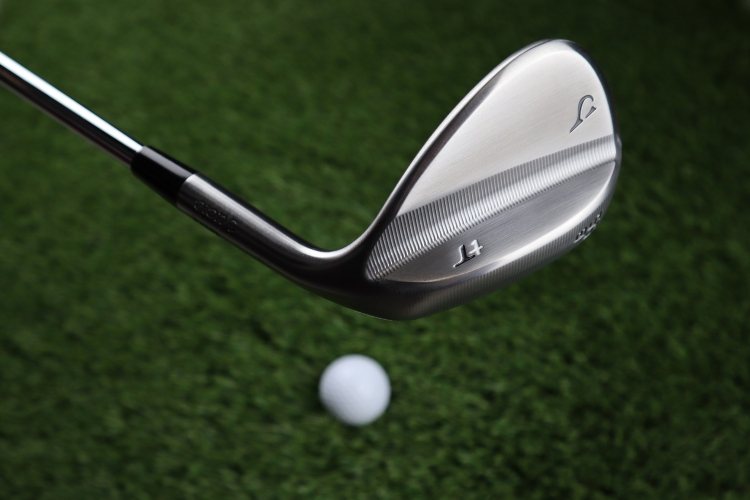
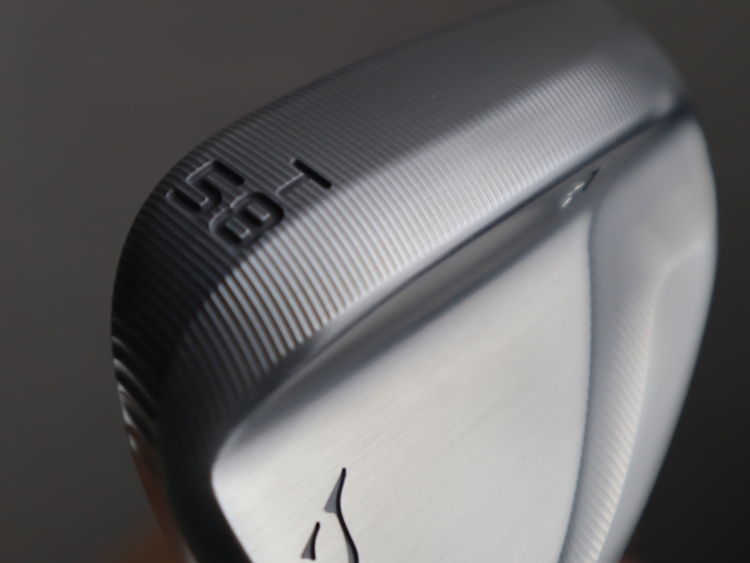
By the way, among the JUCIE clubs, the tT Wedge’s S Sole is the one that completely transforms the feel when you hit it on the grass. It’s the perfect example of this. To be honest, you can hardly tell how good it is on the mats at the driving range… But when you hit it on the grass, it changes so much that you’ll think, “Wait, this is a totally different club!” I’m absolutely head over heels for the S Sole.
If there are any S-Sole users reading this, I think you’ll probably get the idea.
The cH irons also really shine on the green And while there isn’t quite the same gap as with the S sole, these cH irons also really showed their true potential on the green.
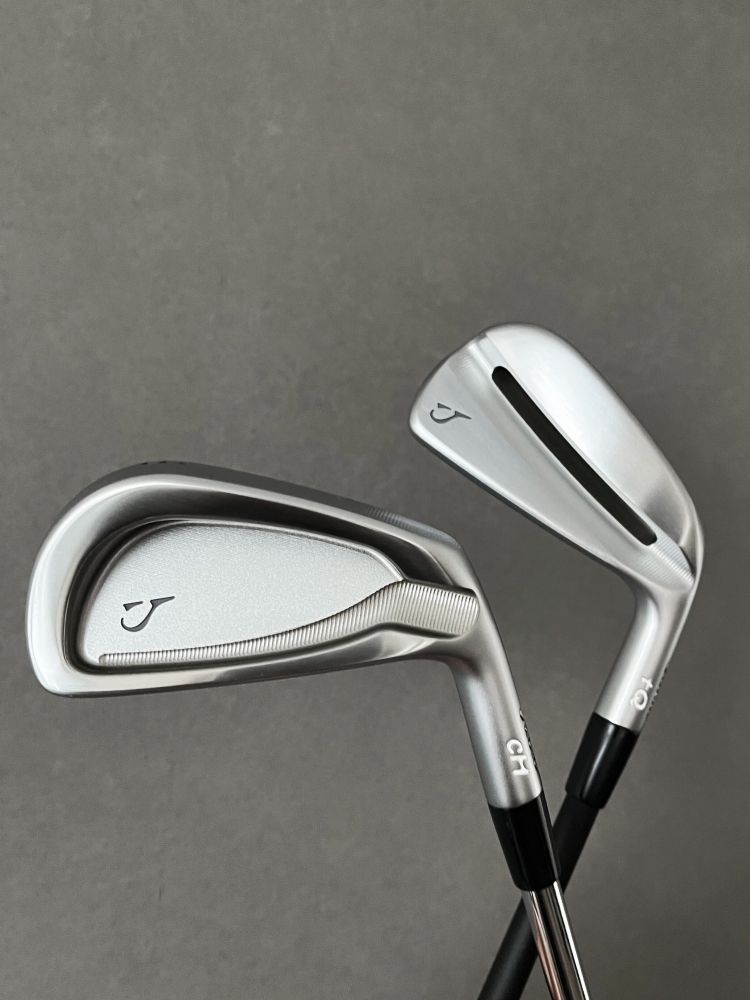
First, when addressing the ball. Compared to the tQ irons, these are significantly larger, and I think they feel substantial even when compared to other manufacturers’ models, including those with composite heads. Yet, strangely enough, I got used to them almost immediately. I wonder if this is due to the ingenuity of their meticulous design, or if this is simply the ideal size for a tour-level setup. If anything, the distinctive protrusion at the toe gives me a tremendous sense of security.
As for the feel of the swing, there’s a distinct sensation of swinging a large clubface. This was even more apparent on the course than it was at the driving range.
And the feel at impact is linked to this, giving you a sensation similar to striking the ball with the entire face of the club. This is where it differs significantly from the tQ irons, If the tQ offers the thrill of a “point” when you make solid contact, the cH provides the comfort of a racket that makes contact with a “surface.” That’s how you can really feel the difference in their character.
The ball flight and distance are really nice, and it just flies. The way the ball flies and the distance it achieves gave me the same impression I had when I tried them at the driving range. Compared to my previous irons, the ball launches a little lower and then glides forward with spin. Distance varies by club, but generally, I was hitting about 10 yards farther. I don’t think it’s necessarily better just to hit the ball as far as possible, but it’s really a relief when it simply flies well.
Because of its high moment of inertia, one of the defining characteristics of the cH irons is its high moment of inertia. Perhaps due to this, there were several instances where, if I started the downswing with a slight sweeping motion that caused the clubface to open, the ball tended to drift right. I feel that this club’s performance isn’t well-suited to a swing where the clubface remains open during the backswing or downswing. On the flip side, maybe that’s just the modern way to use this club. If I swing with the feeling that the position I set up during the takeaway simply returns to its original state, the club responds very naturally. In my case, just by being slightly more conscious of how I bring the club down right before impact, my game improved dramatically. Furthermore, when I tried swinging my driver shot with that same mindset, even my driver improved! Thank you, cH irons... lol.
A problem arose Since I wanted to compare them with the tQ irons that day, I tried using the tQ irons partway through. The cH irons feel so comfortable to use that I thought, “I might not be able to hit anything but the cH irons anymore…?” But I was wrong.
The feeling of hitting the sweet spot on the tQ irons, the solid feedback from the ball in my hands, and how easy the clubhead is to swing. I don’t know why… even though I was using these irons just the other day, I already miss them so much… Using the cH irons really highlighted the difference in character compared to the tQ irons, and it made me appreciate the tQ irons all over again. I guess people really do get used to luxury.
So, what should I do? I want to use both... I can’t exactly pack two sets of irons in my golf bag...
In conclusion, I feel that the cH irons have broadened their target audience significantly. There’s no doubt that this is a model that a wide range of players will enjoy using. Its performance will likely vary considerably depending on the shaft you choose. I’d like to come up with a way to gather your feedback someday.
Hello, this is tK, the blog manager. Things have taken a sudden turn since the last blog post. "The near-final version has arrived." We received word from Mr. Matsuyoshi, and a little while ago, we were shown just the header. Then, right at the deadline for this blog post, he called and asked, "Do you want to publish it?" Of course I do! "Please, let me publish it!" I practically begged him, leaning forward eagerly. Dear readers, I'm truly sorry. I went ahead and published it a little early.
This time, it's the "Fastest Test Impression." ※ I believe Mr. Matsuyoshi will cover the deeper design aspects in future updates, so I'd like to share my impressions purely as a golfer (and as a self-proclaimed #1 fan in Japan).
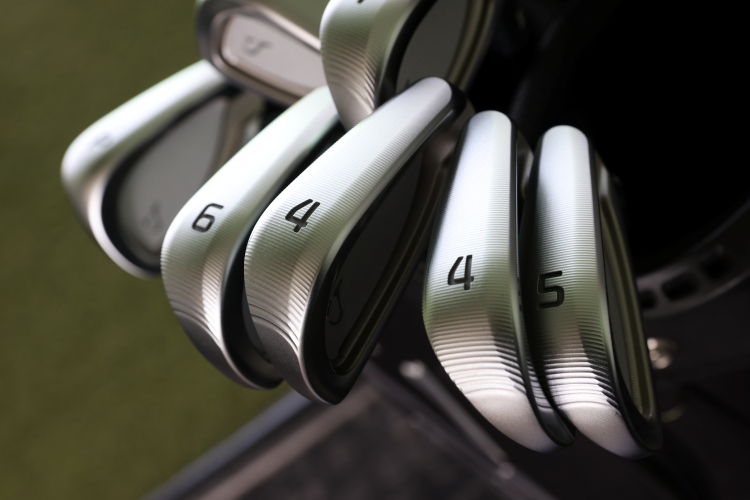
First, the moment I saw them: I threw everything from the 4-iron to the PW into my caddy bag for now. The moment I removed all the iron covers and saw the new irons lined up as clubs again. Yeah, they look awesome... tears. They're not flashy. They're not over-the-top. But they definitely have presence and a sense of luxury. And above all, you instantly know, "These are JUCIE."
Differentiation in the backface isn't the focus of this model, but as a golfer, the appearance of the clubs lined up in my caddy bag is a crucial point that heightens my sense of ownership and satisfaction. They've got that covered too—truly impressive.
This is apparently the near-final version, but they still plan to make adjustments before the final product. After hearing the explanation, I thought, "They go that far, huh?" I really felt there was absolutely no compromise.
Is the "Reiwa Handsome Guy" Really Handsome? When I first heard the term " Reiwa Handsome Guy " and its concept, I was half excited and half anxious about what it would actually look like. But the moment I saw it, I understood. Compared to the heads commonly circulating now, it definitely has its quirks. But those quirks actually become its charm. You know how some actors are like that? They seem distinctive at first glance, but they have this aura and are incredibly cool. It's that kind of vibe.
Moreover, when you hold it— it gives you an incredible sense of reassurance. I think the head size plays a part, and so does the balance of the facial features. Both factors combined made me feel a strong sense of "kindness" emanating from this face. When placed next to the tQ iron, their characters are so different you'd never believe they're from the same brand. I think if someone tried to copy this, it'd just end up looking like some kind of awkward knockoff.
The moment I hit it, something felt off. When I swung lightly from the PW, I knew instantly. "Whoa, the flight is different." This compares to the tQ irons I'm currently using, but I've also compared them to other brands' high moment of inertia irons.
Compared to the tQ iron, I think the slightly steeper loft also plays a role, The launch comes out a bit lower than I imagined— Then it shoots straight up into the sky. It's like there's an invisible rail up there, and the ball races up it. You know how roller coasters have that initial slow climb? If you imagine a rail like that, it's pretty close.
And as you move up to the 9-iron, 8-iron, and 7-iron, it surges forward just the same. What's more, the ball keeps getting "stronger" and stronger. When you switch from a mid-iron to a long iron, "Whoa, it really flies that far!?" If you're used to the smooth, beautiful ball flight of tQ irons, the club number and the ball's momentum don't match up at first. But it also feels different from what you'd call a distance-focused iron. I can't quite put my finger on it, but I think you'll understand once you hit it. And before I knew it— By this point, the quirky face of the Reiwa-era heartthrob felt like it had always been there, and I didn't notice it at all anymore.
Distance and Feel I verified the distance at a range with TrackMan. I felt each club gained 5 to 10 yards. It launches a bit lower, then soars up the rail, making it easy to gain distance. It gives the impression of being relatively easy to hit with a trajectory like a tour ball. And it feels great without compromising the feel. The softness of the soft iron is definitely there.
Just hearing the term "high moment of inertia," I imagined the feel might suffer a bit, but I was completely wrong. I feel this construction is only possible because JUCIE consistently uses FULL CNC machining. It's like a high-end car with air suspension. When you make clean contact, it feels like the entire clubhead envelops the ball. The deep center of gravity brings to mind a fairway wood. It's mild yet has a solid core. The "comfort" Mr. Matsuyoshi mentioned in his recent blog post. Honestly, I could feel it was a perfect fit.
Not just easy to swing, but one that feels great when you let it work. I think the "comfort" you feel can vary significantly depending on which shaft you choose. Please enjoy imagining things like: "Should I stick with the same shaft?" "Or should I go for a slightly more forgiving spec to pursue comfort?"
I'm really looking forward to the course. This time it's the driving range, so my impressions will be based on range balls. But it reminded me. Of the first time I used the tQ irons on the course. I was mesmerized by the beauty of that ball flight.
I wonder what the new irons will be like. I'm sure they'll bring a whole new kind of excitement. Right now, imagining that is the most fun part.
The excellence of the tQ irons, and the distinct advantages of the new iron model. Given their unique characteristics, the choice of which to employ becomes a strategic decision. Such nuanced deployment offers an engaging experience.
In Conclusion Rather than merely examining performance specifications or numerical data, we highly recommend experiencing this iron firsthand. The final iteration, released to the market after meticulous fine-tuning, will arrive in your hands with an even more refined aesthetic. Given its current developmental stage, we anticipate that trial opportunities will be available to you in the near future. We encourage you to experience this new facet of JUCIE. We also intend to provide comprehensive insights into its on-course performance.
Hello, this is tK, the blog administrator. This blog post provides a follow-up on JUCIE's new iron series. From readers of the previous article, we have received several inquiries at JUCIE asking, 'What exactly is Reiwa Ikemen!?' ...Indeed. It's far from over. Since then, I have been making frequent reconnaissance trips to Mr. Matsuyoshi, gathering 'fragments of information' piece by piece. This time, I will share a follow-up report, limited to the information I have been authorized to disclose.
'Reiwa Ikemen' and 'Orthodox' What particularly captures attention, of course, is... As previously announced, JUCIE's upcoming new iron series will feature: • Orthodox • Reiwa Ikemen Models embodying these two distinct design philosophies are slated for simultaneous release. Now, to the main point. Inevitably, the 'Reiwa Ikemen' model is what truly piques curiosity. To be frank, when I first heard this term, my initial reaction was, 'Oh, really...?' (laughs).
However, the more I delved into the details, the clearer it became that this is not merely a catchy name, but a project with extraordinarily ambitious objectives.
The Evolution of Irons Features 'Pivotal Models' During my discussion with Mr. Matsuyoshi, the term emerged: 'Game Changer,' a phrase imbued with significant strategic intent.
Reflecting on the history of irons, there have been several models that marked a distinct shift in design philosophy. Which manufacturer, at what juncture, transitioned to which design ideology? Those who have enjoyed golf clubs for an extended period might possess a more intuitive understanding of these shifts than I do.
The 'Reiwa Ikemen' is reportedly being developed to follow this trajectory, aiming to become the 'next game changer' in the Reiwa era. ...While stated casually, this is, in fact, a remarkably ambitious undertaking.
Technical Fragmentary Information Specifically, one point highlighted was the moment of inertia value. Despite being a one-piece soft iron forging, • The 7-iron boasts a moment of inertia of approximately 2800 g·cm² (among the largest for soft iron head sizes). Individuals who immediately grasp the significance of this figure likely possess a profound dedication to golf equipment.
In recent years, advancements in 3D scanning technology have made it possible to replicate shapes with considerable accuracy. Following JUCIE's product releases, various manufacturers have been closely observing Mr. Matsuyoshi's designs, and frankly, they would likely imitate the shape almost immediately.
However, according to Mr. Matsuyoshi, • Establishing a 'face' characteristic of Reiwa Ikemen • Maintaining the same center of gravity design, a legacy from the tQ irons Even if the shape could be replicated, imitating while simultaneously achieving both these objectives would be an almost impossible feat.
This aspect conveys a unique exclusivity to JUCIE, which is highly gratifying for enthusiasts. The shape features a cavity back design. However, I perceived a subtle distinction from what is typically referred to as a 'forgiving cavity back.'
The Most Unexpected Aspect: 'Loft Settings' Furthermore, what truly surprised me this time was the loft setting. • Reiwa Ikemen: 31° for the 7-iron • Orthodox: 29° for the 7-iron I had anticipated the complete opposite. This configuration, it is explained, naturally arises when considering the club delivery method and the profile of a tour player utilizing it. Consequently, these two models not only possess: • Distinct aesthetics • Different characteristics but also feature a distinctly different 'impact methodology.' While aesthetic appeal serves as an initial selection criterion, the ultimate choice of model is determined by 'how one intends to strike the ball.' I found this approach to be analogous to the selection process for wedge sole designs.
Game Changers Are Initially Met with Skepticism A remark Mr. Matsuyoshi casually made left a lasting impression on me.
Models that become game changers, regardless of the era, are not immediately embraced. However, before long, they become the 'new standard.' The 'Reiwa Ikemen' will likely elicit both praise and criticism. But that is acceptable. JUCIE undertakes such pioneering projects. Mr. Matsuyoshi, as he spoke, wore a subtly amused expression.
Development Progress The demo heads, initially anticipated by the end of last year, are still undergoing refinement due to the intricate milling process, and have not yet reached their satisfactory final form. The more I learned, the more my desire grew: 'I want to see it soon!' 'I want to hit it soon!!' Frankly, I returned with an almost agonizing anticipation. Nevertheless, there is an expectation of being able to experience the actual product in the not-too-distant future, so this excitement is likely to persist for a while longer.
Further Updates to Follow While this update does not reveal the complete picture, the contours are gradually becoming clearer. We will provide further updates as soon as new information becomes available. Next time, we may be able to delve into more in-depth discussions. Please continue to follow our progress.
Hello, this is tK, the blog manager. This time, we have an interview article with a JUCIE retailer.
We bring you stories straight from the "front lines" where we interact directly with customers. The shop that kindly cooperated this time is " GOLF SHOP CHOICE " in Tokyo.
The owner is Mr. Yoshida. My first impression when I met him was I had imagined a meticulous owner of a craft shop, but honestly thought, "He's a total cool dude..." But actually talking to him, he's incredibly kind and very "mature"—including how he never pushes clubs on you. I found that gap really charming. Even listening to his conversations with customers, he has a good kind of "lack of salesmanship." In a bad way... he's probably not very good at selling (lol). But I think that's exactly why his shop is trusted.
■ The Criteria for Choosing Clubs: "The Faces of Regulars" When I asked Mr. Yoshida about his "criteria for sourcing clubs," his response was remarkably simple. "First, the faces of the customers come to mind."
Before the spec sheets, Before the trends, What comes to mind is "people."
"How would that person feel?" "Would that person enjoy this club?"
……Isn't this wonderful? Since it's a business, I think it's natural to choose products based on profit and trends. But before that, the standard is "people." How many shops like this are there, I wonder?
And another phrase that stuck with me: "I won't stock anything I don't believe in myself." Simple, yet profound. I wouldn't recommend something I don't believe in. I felt this was the core of CHOICE.
■ "Ease" and "Difficulty" Are Two Sides of the Same Coin In golf, you often hear the term "easy club." But Mr. Yoshida doesn't use that phrase much.
"With JUCIE, looking at the sole makes me picture a person." This sole seems like it would suit that person's swing. This sole would probably help that person when their angle of attack is off. That's how they think about it.
"There are plenty of clubs for skilled players, but few truly understand the feelings of those who struggle. What constitutes 'kindness' varies for each person. Honestly, I'm grateful for JUCIE, which addresses this through sole designs and other features." I felt the reason CHOICE is said to "walk alongside its customers" is encapsulated in these words:
■ To be honest... "I like the look" While talking about JUCIE, Mr. Yoshida said this with a slight smile. "To be completely honest... I like the look." He apparently liked that "look" Mr. Matsuyoshi had created even before JUCIE. And another thing that stood out was the talk about Furu Mild. "You can get the same item delivered quickly and hand it to the customer." Of course, there's charm in hand-carved "one-of-a-kind" pieces. But sometimes, that excitement fades while waiting a month or two. In that regard, JUCIE lets you get the same quality item immediately. This is really powerful—it helps the store, and customers can use it sooner. The result? Everyone's happy.
■ Customer reactions are "rarely unexpected" When handing over clubs selected while picturing the sole and the user's face, "Reactions completely opposite to expectations are almost nonexistent," he says. Of course, "Sometimes we hear things like 'too much spin.'"
But Mr. Yoshida casually remarks, "That's just basic performance." No sugarcoating. But not dismissive either. I felt that conveying this "honesty" is where the skill of the retailer truly shines.
■ The JUCIE brand is "right in the middle" When asked what image they have of the JUCIE brand, Mr. Yoshida described it this way: "A manufacturer that leans neither way—right in the middle." Not overly flashy. Not overly helpful either. "It's like, 'No need for anything extra,' you know?" This feeling of "not adding too many unnecessary things," feels very much aligned with the CHOICE store as well.
JUCIE stays true to itself. That's its greatest charm. The JUCIE brand ultimately boils down to "It's Matsuyoshi-san, right?" It never fully surrenders to fleeting trends. I hope the simple beauty of single materials and the essence of JUCIE remain forever. I hope the pride in design endures forever.
■ Editor's Note (by tK) What struck me during this interview is that GOLF SHOP CHOICE isn't focused on "clubs"—it's focused on "people." And JUCIE is a manufacturer that truly lives up to that vision. It's not about whether it sells—it's about whether it connects. If you're looking for a shop in Tokyo, please visit CHOICE. I guarantee you won't just talk about clubs.