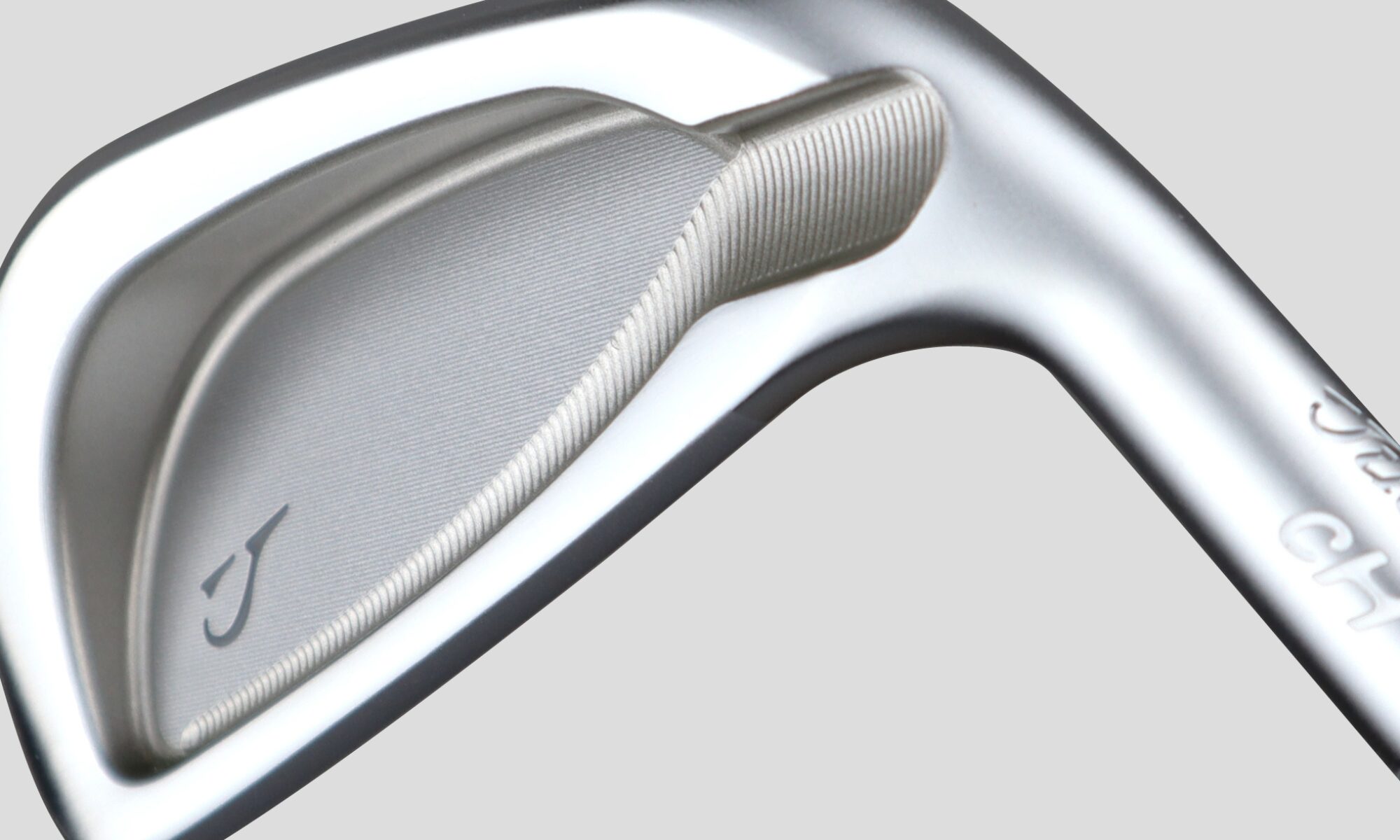

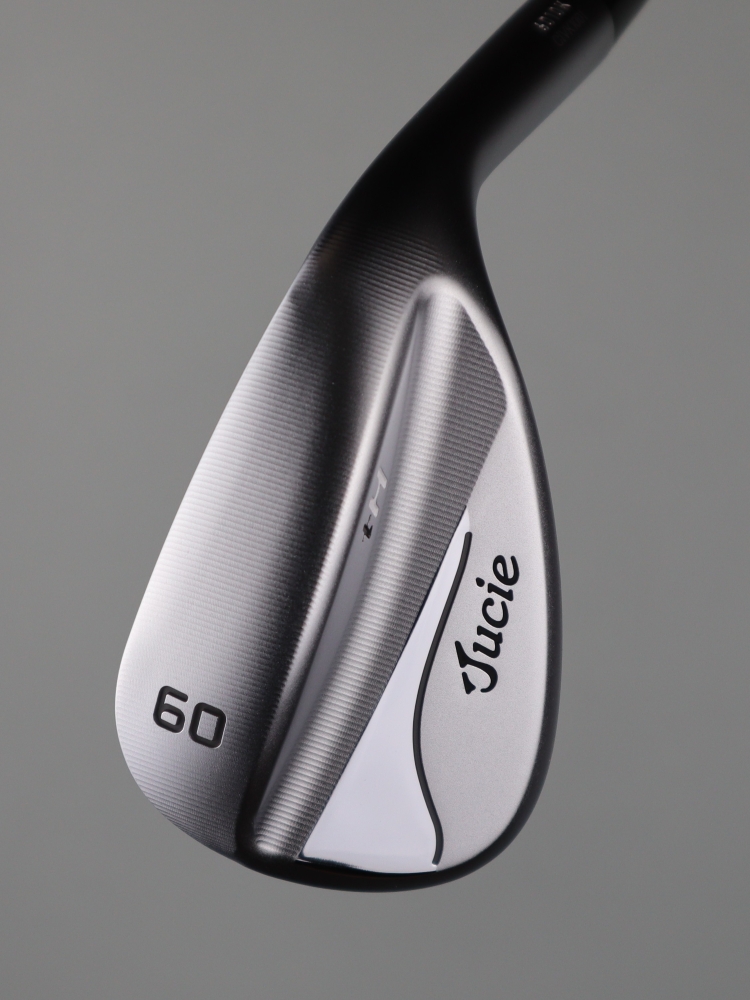
One of mine.

Hello, I'm tK, your blogger.
This is sudden, but let me start with a little bit about my name.
Originally I was going to call myself "tk".
But when I started the blog, Mr. Matsuyoshi suggested, "Wouldn't a capital "K" like "tT" or "tH" be more model-like?"
I thought it would be better to use a capital "K" like tT or tH.
At that moment, I felt something clicked inside me.
"I see! I was so happy to feel like a member of JUCIE, and I like it so much that my signature on the golf course is basically "tK" these days.


What is your "one bottle"?
Today's theme is "my one club".
When it comes to golf clubs, there is no right answer, as everyone has their own particular preferences and ways of enjoying golf, but do you have one club that you absolutely trust?
When I am in trouble, I choose this club for the time being.
・When I am in a nervous situation, I can handle it.
・This club is the one that I don't feel much anxiety about.

Depending on the person, it may be a driver, a utility, a wedge, or a putter.

I think it's a blessing to be able to find such a club in the first place.
I think it's a blessing to be able to find a club like that. I think I'm lucky to have found such a club.


My "one" is my first JUCIE
My "one" is the first club that I picked up, used on the course for the first time, and was shocked for the first time and said "What the heck...".
That was the tH Wedge 6010K. I have mentioned this model in other articles, but this baby is special to me.
It is the club that I should say "the first club that I seriously loved.


The moment you set up the 6010K, there is a sense of...
"I have a feeling that things are going to go well".
Roundness. Gentleness.
But it's exquisite and not too sweet.
The color of the plating may also have an effect, but this club has an atmosphere that tells you, "It's okay.
A rare 60° wedge that "doesn't go wild"
When you hear about a 60° wedge, you may think, "It's easy but doesn't go far," or "It goes up too high and is hard to handle," or "It just spins. It's too high and hard to handle," or "unstable with strong spin," are the images that many people have when they hear the word "60° wedge.
But this 6010K is totally different.
It rises, but not too much.
It flies well, but not too much.
Spin is effective, but not too much.
The ultimate in "middle of the road".

Even when the grass is thin or sunken in, the ball rolls with a "plop" just by hitting the ball.

In the middle of the "middle of the high dimension"
I've played a lot of wedges, and there are a lot of safe wedges in the world.
There are a lot of safe wedges out there that are at the level of "usable in general.
But the 6010K has a "middle ground" that is not at that level.
I think this is really difficult to achieve.

In cars, it is a Mercedes AMG or BMW M series.
Normally, they can be driven normally, but if you step on the gas pedal, they will turn on their fangs.
But the design makes it feel like it can be handled "normally.
I think the 6010K has that smell.

Extremes are not extreme, but the more extreme, the better.
Even when thinking about swinging, extreme movements are easy to visualize and simple.
It's easy to imagine the "extremes" of the swing: hitting the hook with all your might
- hitting the slice with all your might
- relaxing too much
- putting in too much effort
.
But what is really difficult is to find the "perfect middle ground.
It's really difficult to find the "perfect middle ground" and make a "normal shot" without being too much in either direction.
I think it is the same with clubs.
6010K has this "secret hidden in the ordinary" thoroughly in mind.
The more you use it, the more you understand it.
The more you use the club, the more you realize that the balance is extraordinary.


Finally,
I am sure you all have a "one" club in your life.
It is not so much the performance of the club, but the memories and experiences that come back to you the moment you hold it.
A club that has a story behind it is very special, don't you think?
And if this 6010K becomes someone's "one" someday, that alone would make me happy, and I am sure Mr. Matsuyoshi would be pleased as well, with a quiet grin on his face.
This is the story of my "beloved one".

Can we reset the conventional wisdom of wedge selection? -Part 2

In the previous issue, we discussed how sole performance should be judged not in one dimension, such as sole angle, but in two dimensions, such as thickness and width, and in three dimensions, such as changes in the toe and heel directions.
This time, I would like to talk about how you can select a wedge more satisfactorily if you are aware of the 4-dimensional performance beyond that, such as what is right for you and why it is not right for you.


What is my definition of the 4 dimensions of club design?
Generally speaking, three dimensions are the space that can be represented by length x width x height. When I design a golf club, I consider the shape and center of gravity performance to realize how many desired shots can be hit within the physical constraints of what size and weight can be made in this space.
Another dimension is then added, and the general interpretation is that the fourth dimension is time. To put it very simply, the interpretation is that "even if the same object has a different time, its position cannot be determined. In club design, then, it is simply a matter of the length of time (experience and knowledge) that the user has been playing golf. We believe that we have to be very conscious of the fact that the requirements for clubs are changing and becoming more specific.
To put it simply, for example, when you hold a club that is upright, there are those who hold it with their hands up as per the club, and those who hold it in a position that is comfortable for them and float the toe. This difference alone can make a big difference in the outcome. We design our clubs by considering whether such differences are a result of individuality or experience, and which is the target image of the clubs we are designing. I design the clubs with these considerations in mind.


Conversation between Akinori Sasaki and his coach
The previous example is rather simple, but I have always had an almost delusional consideration of the differences in the way golfers use their tools depending on their experience, which is a little deeper than that, but there was something I felt concretely expressed such a consideration.
In an interview with major leaguer Akinori Sasaki, who had been in bad shape for a while and then made a comeback, he talked about his interactions with his coach, in which he asked, "Which pitches are easier to throw?" Does he have any pain? and "Do you have any pain?" as well as "Is there anything that your coach told you when you were in the 5th grade or so that you continue to follow?" I was asked. This is exactly what I do when I design a club, or when I am asked for a recommendation for a club, and I was very impressed by the fact that they are making adjustments with this kind of thing in mind at the cutting edge of major league baseball.


Wedges that suit golfers with long golfing experience
To be more specific, even if a single wedge shot is not always the best way to use a wedge, I believe that each golfer, at some point in his or her career, will have an inspiration that will lead him or her to hit the wedge in a way that he or she values and cherishes as his or her own successful experience. I believe that each golfer, at some point in his or her life, has an epiphany and unconsciously plays in a way that he or she values as a successful experience. However, in many cases, the golfer may be accumulating such inspirations, and when he or she realizes this, he or she may hit a move that is not necessarily correct for the equipment he or she is currently using as his or her image of a good shot, and as a result, may repeatedly hit a miss shot. As a result, you may end up repeatedly hitting a wrong shot.
A typical example is the "wedge shot with backspin to stop". This tends to be a shot that was created by accident due to the ball used at the time, the softness or slope of the green, or the bite of the grass or pebbles, and we always want to reproduce it. As this desire grows stronger, it can eventually lead to the yips due to excessive expectations for shots that have a low probability of success.
At such times, we would like you to remember the times when you were practicing the most, the shots that inspired you unconsciously, the wedge shots you were making at that time, and so on. Instead of forcing a spin shot, you might have pulled the ball in a simpler way. The ball might have been completely different. The Juicy tH wedge series was designed with such golfers in mind. This model is intended for those who learned to play golf and practiced a lot before the so-called spin wedges came out. Rather than simply recreating the wedges of that time, we have tried to design wedges that are easy for those who used to use them to hit simple wedge shots, and the shape is easy to set up and secure while keeping in mind recent trends. The wedges are also fun to use with a slightly open stance to generate strong spin. The result is a wedge that is simple and easy to use for those who have been playing golf for a long time, as well as for those who have just started playing.


Overriding inspiration is also important.
On the other hand, there are many cases where unconscious inspiration does not match the shot you want to hit at the moment. Even if you are a little confused at first, you will be able to find a new "this is it! If you get an inspiration, it will be an enjoyable golf life that will evolve together with your tools.