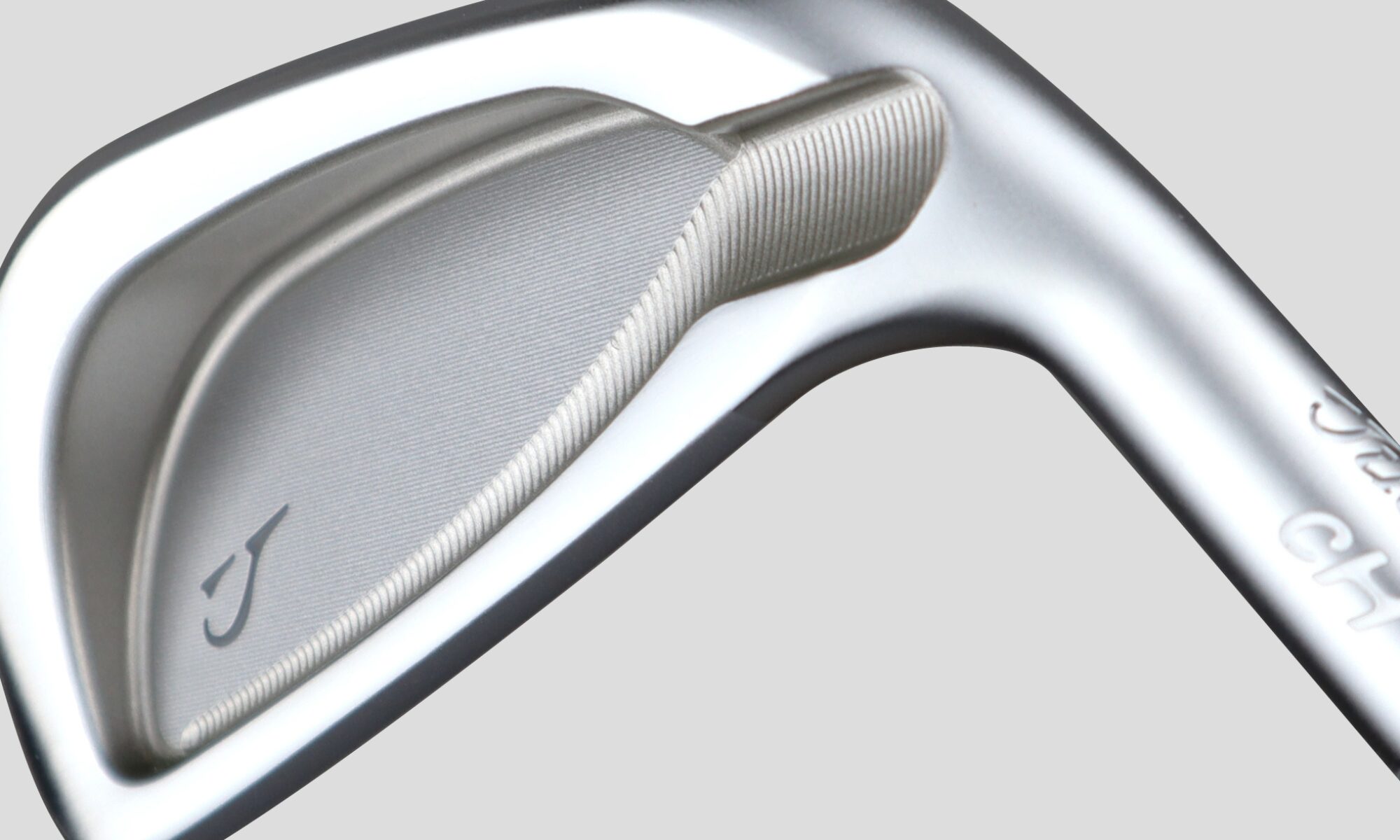

JUCIE Retailer Interview

― GOLF SHOP CHOICE (Tokyo) / Owner Mr. Yoshida
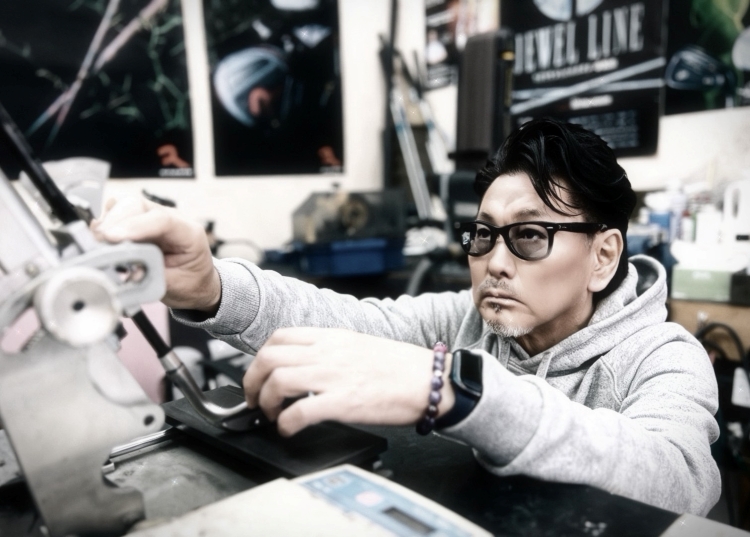
Hello, this is tK, the blog manager.
This time, we have an interview article with a JUCIE retailer.

We bring you stories straight from the "front lines" where we interact directly with customers.
The shop that kindly cooperated this time is " GOLF SHOP CHOICE " in Tokyo.

The owner is Mr. Yoshida. My first impression when I met him was
I had imagined a meticulous owner of a craft shop, but honestly thought, "He's a total cool dude..."
But actually talking to him, he's incredibly kind and very "mature"—including how he never pushes clubs on you.
I found that gap really charming.
Even listening to his conversations with customers, he has a good kind of "lack of salesmanship."
In a bad way... he's probably not very good at selling (lol).
But I think that's exactly why his shop is trusted.


The Criteria for Choosing Clubs: "The Faces of Regulars"
When I asked Mr. Yoshida about his "criteria for sourcing clubs," his response was remarkably simple.
"First, the faces of the customers come to mind."

Before the spec sheets,
Before the trends,
What comes to mind is "people."

"How would that person feel?"
"Would that person enjoy this club?"

……Isn't this wonderful?
Since it's a business, I think it's natural to choose products based on profit and trends.
But before that, the standard is "people."
How many shops like this are there, I wonder?

And another phrase that stuck with me:
"I won't stock anything I don't believe in myself."
Simple, yet profound.
I wouldn't recommend something I don't believe in.
I felt this was the core of CHOICE.


"Ease" and "Difficulty" Are Two Sides of the Same Coin
In golf, you often hear the term "easy club."
But Mr. Yoshida doesn't use that phrase much.

"With JUCIE, looking at the sole makes me picture a person."
This sole seems like it would suit that person's swing.
This sole would probably help that person when their angle of attack is off.
That's how they think about it.

"There are plenty of clubs for skilled players, but few truly understand the feelings of those who struggle. What constitutes 'kindness' varies for each person. Honestly, I'm grateful for JUCIE, which addresses this through sole designs and other features."
I felt the reason CHOICE is said to "walk alongside its customers" is encapsulated in these words:


To be honest... "I like the look"
While talking about JUCIE, Mr. Yoshida said this with a slight smile.
"To be completely honest... I like the look."
He apparently liked that "look" Mr. Matsuyoshi had created even before JUCIE.
And another thing that stood out was the talk about Furu Mild.
"You can get the same item delivered quickly and hand it to the customer."
Of course, there's charm in hand-carved "one-of-a-kind" pieces.
But sometimes, that excitement fades while waiting a month or two.
In that regard, JUCIE lets you get the same quality item immediately.
This is really powerful—it helps the store, and customers can use it sooner.
The result? Everyone's happy.


Customer reactions are "rarely unexpected"
When handing over clubs selected while picturing the sole and the user's face,
"Reactions completely opposite to expectations are almost nonexistent,"
he says.
Of course,
"Sometimes we hear things like 'too much spin.'"

But Mr. Yoshida casually remarks, "That's just basic performance."
No sugarcoating.
But not dismissive either.
I felt that conveying this "honesty" is where the skill of the retailer truly shines.


The JUCIE brand is "right in the middle"
When asked what image they have of the JUCIE brand,
Mr. Yoshida described it this way:
"A manufacturer that leans neither way—right in the middle."
Not overly flashy.
Not overly helpful either.
"It's like, 'No need for anything extra,' you know?"
This feeling of "not adding too many unnecessary things,"
feels very much aligned with the CHOICE store as well.

JUCIE stays true to itself. That's its greatest charm.
The JUCIE brand ultimately boils down to "It's Matsuyoshi-san, right?"
It never fully surrenders to fleeting trends.
I hope the simple beauty of single materials and the essence of JUCIE remain forever.
I hope the pride in design endures forever.


Editor's Note (by tK)
What struck me during this interview is that GOLF SHOP CHOICE isn't focused on "clubs"—it's focused on "people."
And JUCIE is a manufacturer that truly lives up to that vision.
It's not about whether it sells—it's about whether it connects.
If you're looking for a shop in Tokyo, please visit CHOICE.
I guarantee you won't just talk about clubs.
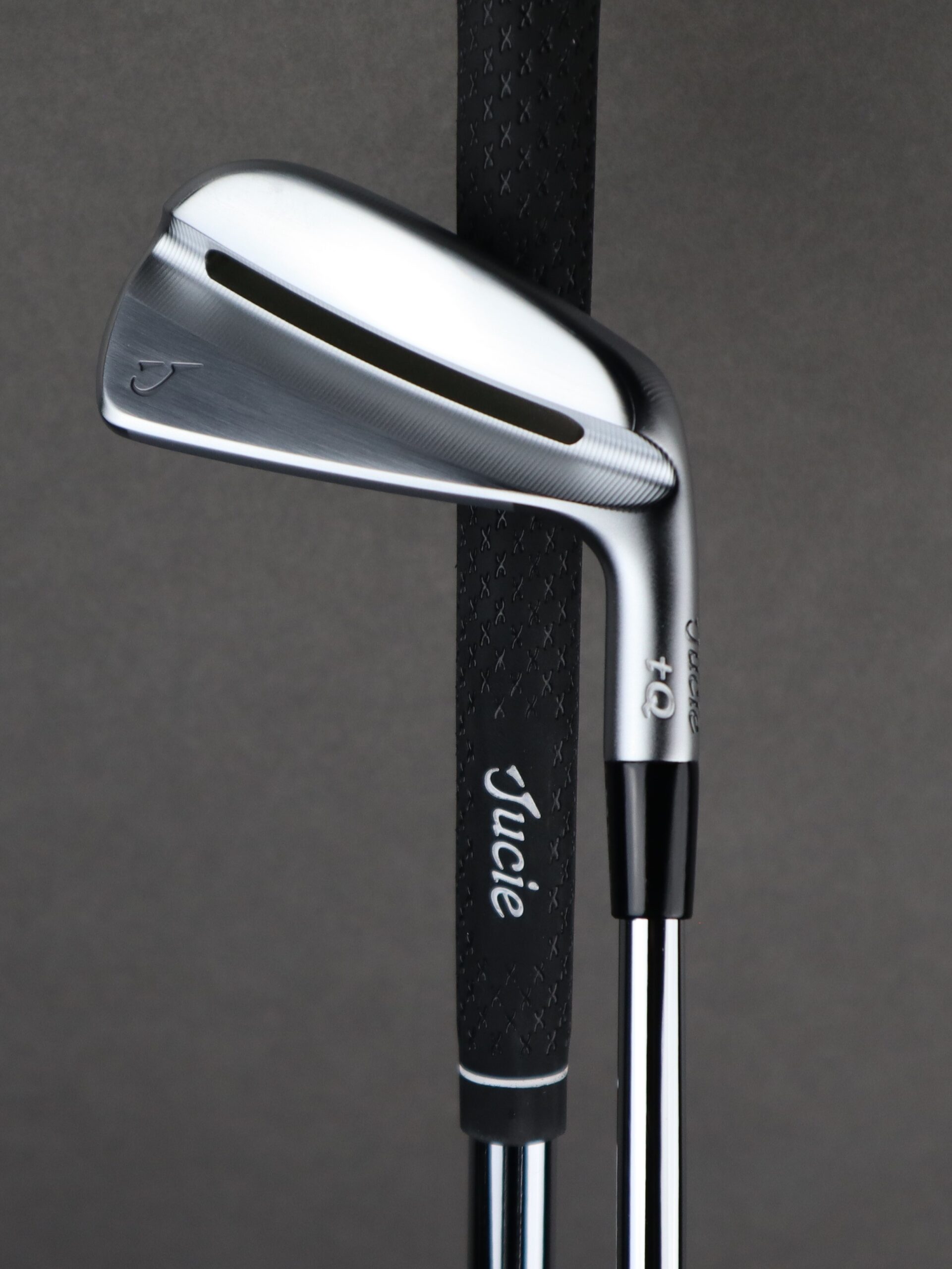
Beyond the "Easy-to-Use Club"

This time, I simply want to write about what thoughts I wish to put into golf club design as we approach 2026.


A key phrase frequently mentioned when discussing recent club performance is "usable easy clubs," as highlighted in the headline. Historically, pros and advanced players often preferred "usable difficult clubs" emphasizing control, while amateurs frequently used clubs that heavily compensated for poor swing mechanics or lack of speed—clubs that advanced players might deem "unusable easy clubs."However, since the widespread adoption of performance-measuring devices that provide quantifiable results, this trend has gradually shifted. Particularly, the significant evolution in the ease of hitting high-moment-of-inertia drivers has made this "ease" advantageous even for pros, leading to the emergence of "usable, easy-to-hit clubs." Since then, there seems to be a growing demand for "usable, easy-to-hit clubs" extending to fairway woods, utility clubs, and irons as well.


From tightrope walking to sturdy bridges
I often use the analogy of crossing a valley quickly to explain the evolution of clubs toward these large heads. When crossing a valley to the other side, small drivers like persimmon heads are like tightrope walking. In that era, only a handful of masters could balance and move quickly along the rope.The metalwood era was like a swaying suspension bridge. While still accompanied by the fear of falling, it was passable enough. Titanium drivers became a bridge that didn't sway. The era of high moment of inertia drivers is like a sturdy bridge with a wide roadway. At this point, as long as you didn't lose your direction, you could even run at full speed, and anyone could safely cross the valley. Professional golfers' skills shifted from requiring tightrope-walking mastery to needing the athletic ability to run fast.
So, what about irons? While the swing trend is becoming more athletic, they still can't be called sturdy bridges. They feel more like suspension bridges or narrow bridges without railings, even if they don't sway.Consequently, manufacturers are experimenting with various approaches to enhance performance. However, the current sales reality seems focused on the distance competition of the #7 iron. Rather than strengthening the suspension bridge, the trend has shifted towards excessive lightweighting and strong lofts – essentially, if you can't cross it fast, just tilt the bridge downhill.


The straightforward , logical argument is what I've written about so far. However , what I prioritize in my design approach for 2026 is to design with a deeper understanding that actual golfers incorporate and practice movements that are not ideal, either unconsciously or consciously. Using the earlier example, I found inspiration in an interesting story I heard from my mentor.
"When traversing a narrow ridge under harsh conditions like Everest, with a 4000m drop on the right and a 2000m drop on the left, falling either way means certain death. Yet, strangely, you find yourself wanting to lean left as you walk."If we use the analogy of crossing a valley, it's like being on a bridge that's safe to cross if you're not in such a hurry, yet you end up leaning toward the shallower side of the valley as you run. This is precisely the golfer's psychology we should focus on: often, driven by the sheer desire to avoid mistakes, we actively incorporate movements that deviate from the ideal. When this happens, even a "usable, forgiving club" won't produce the ideal ball flight, and a negative mindset seems likely to accumulate.
Furthermore, including the driver, many golfers still strongly believe that progressing like a tightrope walker is their familiar golf. Even on a wider bridge, they diligently maintain a meticulous swing, never neglecting to keep both hands level to maintain balance.


Juicy NEW Model Direction
Starting in 2026, Juicy aims to embark on a new chapter.
We will increase the number of clubs that deliver a truly "gentle" feel.
Using the analogy of crossing a valley, first, we must design clubs that are reliably sturdy, even if just a little, and with a wide path. This creates the "usable, gentle clubs" needed today. Furthermore, if many players tend to lean toward the shallower side of the valley, we will subtly design the path to slope deeper.Or, we could add a safety railing on the deeper side. And instead of an easy downhill bridge, we could subtly start with a gentle slope—providing just the right amount of assist to move forward with confidence. If you swing with your hands level, it should still feel great to run, with performance that makes feedback easy to feel. We aim to gradually develop a series that offers this kind of "ease" attuned to the golfer's mindset, allowing you to dash forward with confidence.

Notice of Winter Vacation

We would like to take this opportunity to express our sincere gratitude for your continued patronage.

We regret to inform you that we will be temporarily closed during the following period.

 Saturday, December 27, 2025 ~ Sunday, January 4, 2026

Inquiries received during our closure will be addressed in order starting Monday, January 5, 2026.

We apologize for any inconvenience this may cause, and thank you for your patience.