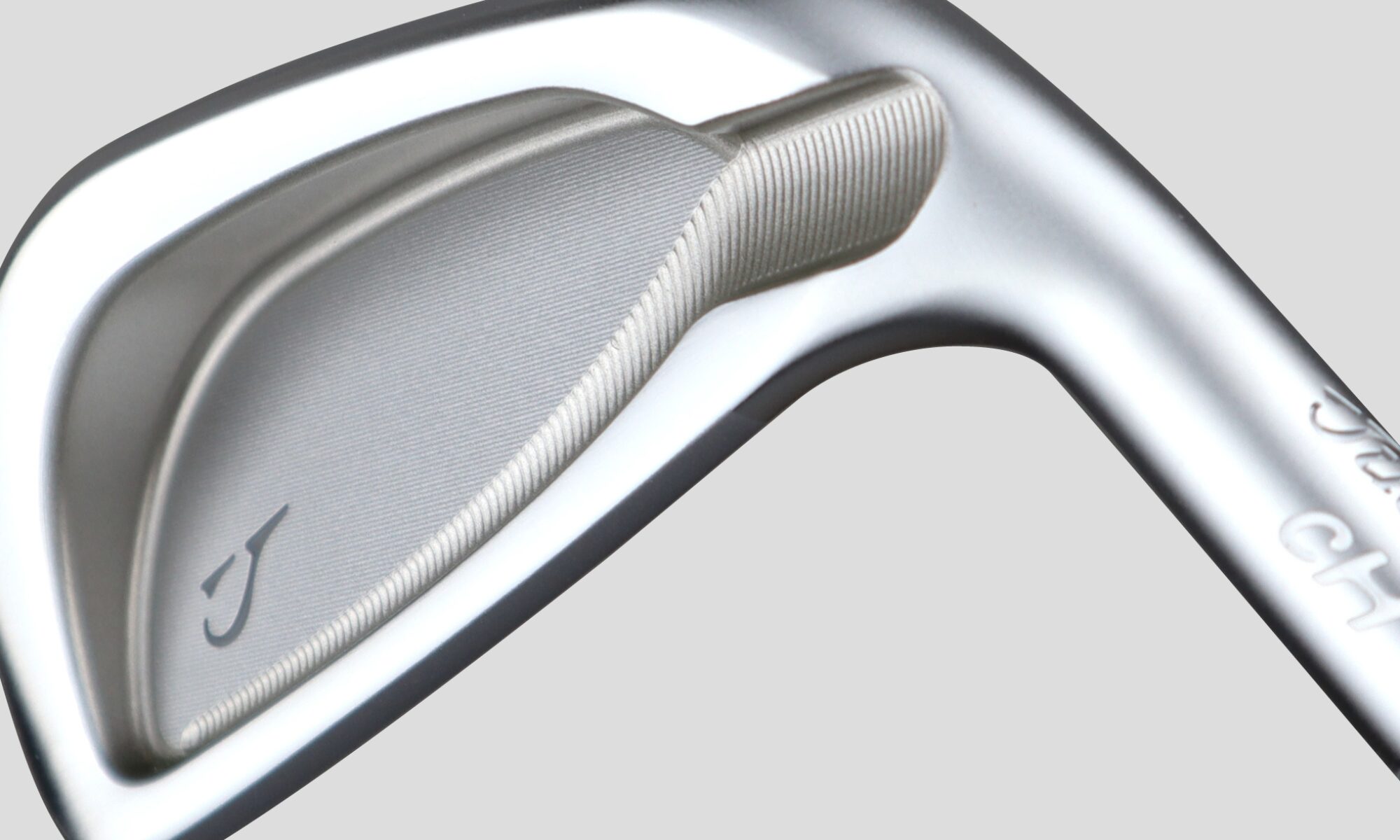

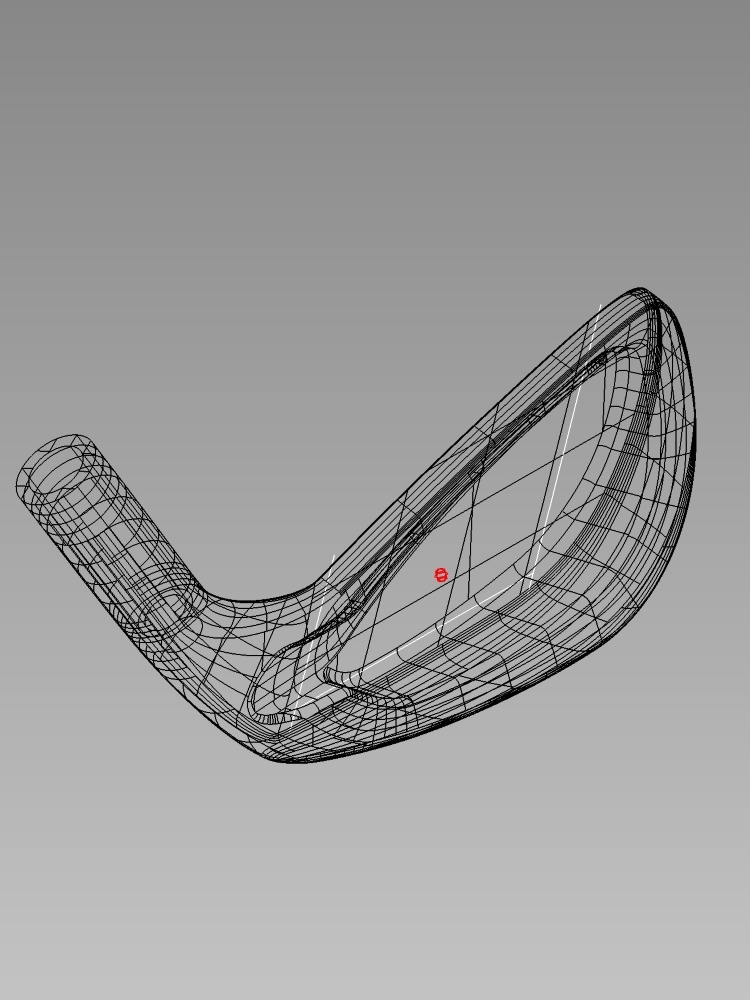
Further Updates on New Iron Models

Hello, this is tK, the blog administrator.
This blog post provides a follow-up on JUCIE's new iron series.
From readers of the previous article,
we have received several inquiries at JUCIE asking, 'What exactly is Reiwa Ikemen!?'
...Indeed. It's far from over.
Since then, I have been making frequent reconnaissance trips to Mr. Matsuyoshi, gathering 'fragments of information' piece by piece.
This time, I will share a follow-up report, limited to the information I have been authorized to disclose.


'Reiwa Ikemen' and 'Orthodox'
What particularly captures attention, of course, is...
As previously announced, JUCIE's upcoming new iron series will feature:
• Orthodox
• Reiwa Ikemen
Models embodying these two distinct design philosophies are slated for simultaneous release.
Now, to the main point.
Inevitably, the 'Reiwa Ikemen' model is what truly piques curiosity.
To be frank, when I first heard this term, my initial reaction was, 'Oh, really...?' (laughs).

However, the more I delved into the details, the clearer it became that this is not merely a catchy name,
but a project with extraordinarily ambitious objectives.


The Evolution of Irons Features 'Pivotal Models'
During my discussion with Mr. Matsuyoshi, the term emerged:
'Game Changer,' a phrase imbued with significant strategic intent.

Reflecting on the history of irons,
there have been several models that marked a distinct shift in design philosophy.
Which manufacturer, at what juncture, transitioned to which design ideology?
Those who have enjoyed golf clubs for an extended period
might possess a more intuitive understanding of these shifts than I do.

The 'Reiwa Ikemen' is reportedly being developed to follow this trajectory, aiming to become the 'next game changer' in the Reiwa era.
...While stated casually, this is, in fact, a remarkably ambitious undertaking.


Technical Fragmentary Information
Specifically, one point highlighted was the moment of inertia value.
Despite being a one-piece soft iron forging,
• The 7-iron boasts a moment of inertia of approximately 2800 g·cm² (among the largest for soft iron head sizes).
Individuals who immediately grasp the significance of this figure likely possess a profound dedication to golf equipment.

In recent years, advancements in 3D scanning technology have made it possible to replicate shapes with considerable accuracy.
Following JUCIE's product releases, various manufacturers have been closely observing Mr. Matsuyoshi's designs,
and frankly, they would likely imitate the shape almost immediately.

However, according to Mr. Matsuyoshi,
• Establishing a 'face' characteristic of Reiwa Ikemen
• Maintaining the same center of gravity design, a legacy from the tQ irons
Even if the shape could be replicated, imitating while simultaneously achieving both these objectives would be an almost impossible feat.

This aspect conveys a unique exclusivity to JUCIE, which is highly gratifying for enthusiasts.
The shape features a cavity back design.
However, I perceived a subtle distinction from what is typically referred to as a 'forgiving cavity back.'


The Most Unexpected Aspect: 'Loft Settings'
Furthermore,
what truly surprised me this time was the loft setting.
• Reiwa Ikemen: 31° for the 7-iron
• Orthodox: 29° for the 7-iron
I had anticipated the complete opposite.
This configuration, it is explained, naturally arises when considering the club delivery method and the profile of a tour player utilizing it. Consequently, these two models not only possess:
• Distinct aesthetics
• Different characteristics
but also feature a distinctly different 'impact methodology.'
While aesthetic appeal serves as an initial selection criterion, the ultimate choice of model is determined by 'how one intends to strike the ball.'
I found this approach to be analogous to the selection process for wedge sole designs.


Game Changers Are Initially Met with Skepticism
A remark Mr. Matsuyoshi casually made left a lasting impression on me.

Models that become game changers,
regardless of the era, are not immediately embraced.
However, before long, they become the 'new standard.'
The 'Reiwa Ikemen' will likely elicit both praise and criticism. But that is acceptable.
JUCIE undertakes such pioneering projects.
Mr. Matsuyoshi, as he spoke, wore a subtly amused expression.

Development Progress
The demo heads, initially anticipated by the end of last year,
are still undergoing refinement due to the intricate milling process, and have not yet reached their satisfactory final form.
The more I learned, the more my desire grew: 'I want to see it soon!' 'I want to hit it soon!!'
Frankly, I returned with an almost agonizing anticipation.
Nevertheless, there is an expectation of being able to experience the actual product in the not-too-distant future,
so this excitement is likely to persist for a while longer.

Further Updates to Follow
While this update does not reveal the complete picture, the contours are gradually becoming clearer.
We will provide further updates as soon as new information becomes available.
Next time, we may be able to delve into more in-depth discussions.
Please continue to follow our progress.
Beyond 'Usable and Forgiving Clubs' - Part 2 -

As we enter 2026, I wish to continue from my previous entry, articulating my vision for Jucie's products and our future objectives.


Are Jucie Clubs Difficult to Play?
We are frequently asked if Jucie clubs are challenging to play. While I would prefer to answer no, I also understand why such an impression might arise. Since our inaugural model, we have released wedges with performance akin to professional personal models, and numerous professional golfers have utilized them to achieve multiple victories. While this naturally creates the perception of 'pro models,' my design philosophy and meticulous attention to detail differ slightly, which I intend to explain by drawing an analogy to automobile performance.


The paramount factor is superior fundamental performance.

Both automobiles and golf clubs are frequently categorized, and in my perception, sports cars are akin to professional models, while family cars resemble amateur models. Furthermore, our engagement with tour professionals evokes the image of participating in serious races, much like a works team. It's akin to racing with vehicles that are not street-legal. Consequently, one might conclude that while sports cars are appealing, they are unmanageable, or that since high speeds are not a priority, professional models would not be actively chosen.
However, Jucie's models are subtly different. They are comparable to rally cars competing in production-car-based races or the WRC. The crucial aspect is that the base vehicle is meticulously engineered for comfortable urban driving, yet possesses such high fundamental performance that, with tuning and driver skill, it can achieve extraordinary speeds. Examples include cars like the R32 GT-R, the first-generation Impreza, the Swift Sport, or, in the current era, the Yaris.
Jucie clubs are designed with a profound awareness that, when paired with the appropriate shaft and assembly, they offer comfortable performance even for the average golfer. Therefore, we encourage selection based on the principle of 'my model = easy to use,' rather than 'pro model = difficult.'
However, to achieve this level of performance, while it is essential for me to be a professional designer, the fundamental performance must also be discernible within the professional domains of tuning and user experience. Therefore, we intend to steadfastly continue our works team-like activities, constantly refining ourselves alongside professional golfers who play at the forefront, and aspire to continuously create clubs that bring joy to as many golfers as possible.


Should Vehicles Be Solely Purpose-Driven?
Automobiles are categorized by various objectives, not limited to speed, such as off-road capability, passenger and cargo capacity, or fuel efficiency prioritization. While Jucie's core philosophy is to 'aim for a rally car with high fundamental performance,' we also constantly ponder whether vehicles should solely be designed for speed.
Approximately 25 years ago, I drove a compact 4WD manual transmission sports car that boasted 180 horsepower from a 1600cc engine, a remarkable power-to-displacement ratio for its time. However, due to the inconvenience of daily use, I transitioned to a 3-door compact SUV, which was quite rare back then. That vehicle was marketed towards younger individuals with a snowboarder image, but I heard it sold exceptionally well among the senior demographic.
The reason for its popularity was that, at the time, the term 'SUV' was not yet established, and it fell into a category of vehicles focused on off-road capability, such as 'cross-country' models. However, its ease of entry and exit, higher eye-point, and effortless driving over minor obstacles were reportedly highly valued by seniors. Today, I believe there has been a significant increase in the number of seniors driving compact SUVs.


Clubs That Generate New Needs, Born from the Field
Similar phenomena occasionally occur in golf clubs. A recent example is a model introduced by a certain manufacturer, positioned as an intermediary club between a utility and a fairway wood (Fw). Upon evaluating its center of gravity performance, I observed that while its trajectory resembled that of an Fw, its influence on the swing was anticipated to be closer to an iron than an Fw. I felt it was optimally suited for users who prefer iron-type utility clubs and desire slightly more spin. Consequently, its usage increasingly aligned with this prediction, and I found it fascinating how, with each model revision, its specifications evolved to become progressively closer to those of an iron.
Just as the compact SUV evolved through the accumulation of evaluations that differed from its initial purpose, golf clubs, too, will establish new standards if their actual performance meets golfers' emerging needs, rather than being judged solely by category. Furthermore, we are committed to meticulously crafting clubs that are not specialized by category but offer a balanced ease of use—'performance that simply allows for enjoyable golf.' We also believe that wedges and utility clubs still possess significant potential for evolution and change. Therefore, we aim to adopt an even more field-oriented approach, relentlessly pursuing what clubs are truly needed by actual golfers.
We are also contemplating various new initiatives to effectively capture these evolving needs, so please look forward to them.