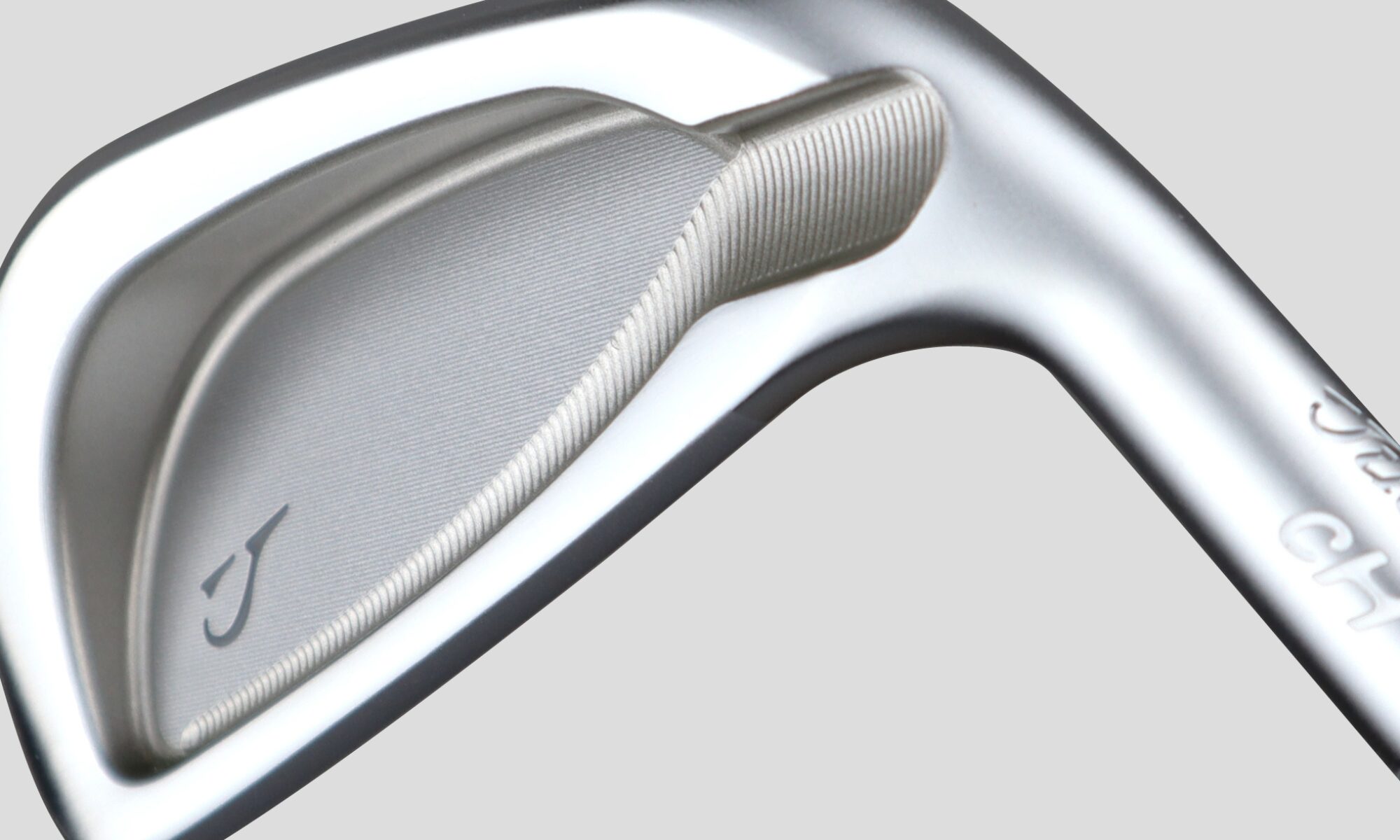

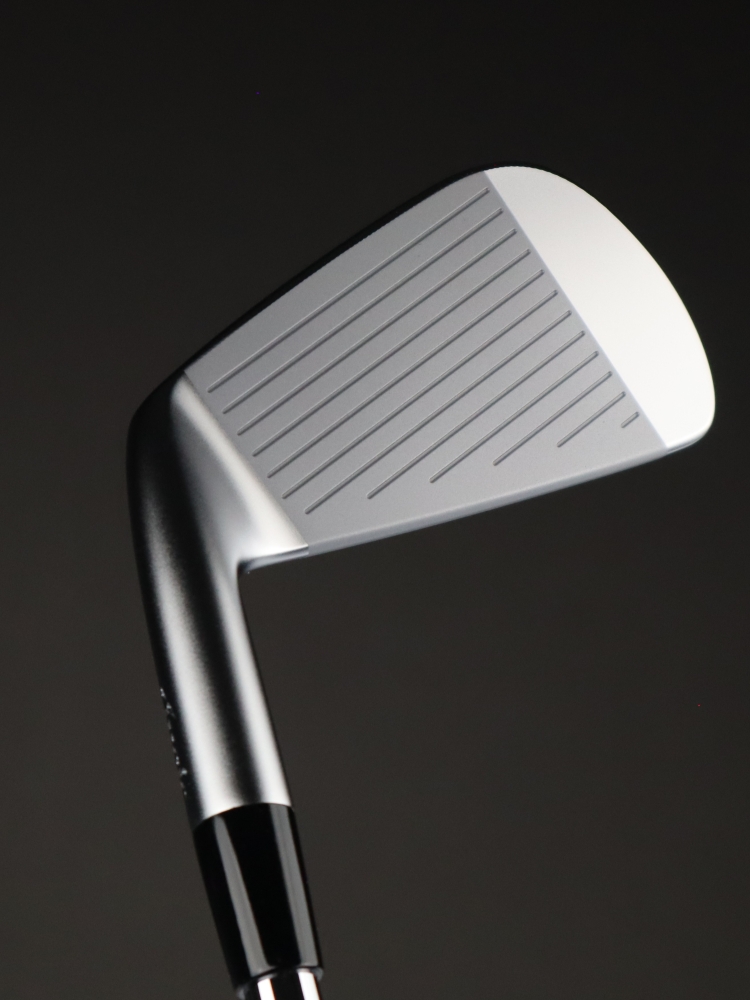
Thank you for your patience. In April 2026, we finally began shipping the cH Irons.
Until now, whenever we asked AI about the new model, the only response we received was something like, “There have been hints on the manufacturer’s social media, so it will likely be announced soon…” We are delighted to finally be able to share the detailed specifications and our vision behind this product with you all.
"True Ease of Play" Adopted Immediately by Pros
We are delighted to report that the cH irons have already been put to the test on the professional tour.
Experienced players active on both the Regular and Senior Tours highly praised this performance and immediately adopted it as a weapon in their game. Amidst a flood of "tour models in name only" with no track record and clubs touting "forgiveness" with little basis, we were able to quickly prove the concept of a "forgiving club that even pros can use"—a goal we set out to achieve from scratch—which gave us a slight sense of relief.
A Sense of Discomfort with "Evaluation Criteria" That Have Remained Unchanged for Nearly 20 Years
Why did we choose "Reiwa's Handsome Guy" as the theme for the cH irons?
The reason lies in our desire to challenge the recent evaluation criteria for golf clubs.
Currently, a club’s “good looks” are often defined by the design of its back face.Of course, the shape of the face at address is also important, but I felt that the shapes favored by so-called “advanced players” hadn’t evolved much over the past 20 years. As a result, comments like “It has a nice look” have increasingly come to refer to the back face.
We believe that the “impression at address” is extremely important. That is why, on our official website, we feature images of all club heads (at address) rather than just the representative models.
Do Golfers of a New Era Need Traditional Standards?
In the wake of the COVID-19 pandemic, the golf world has seen an influx of new players. Even in my own circle, I’ve been getting more and more requests from friends and younger colleagues for advice on choosing their first set of clubs.
This has led me to wonder: “Is it really necessary to impose the standards of ‘coolness’ that traditional golfers have long revered on today’s players?”Specifically, regarding that “stylish” look when addressing the ball, I’ve come to strongly question whether the face shapes favored by masters of swing-through face control and impact point control are truly the best options for people who start with large drivers and practice by referencing the latest golf swings on social media.
"The 'Reiwa-Era Heartthrob'"
When we focused on the face shape as a performance feature for golfers adopting a new swing, our vision expanded rapidly.What constitutes a new kind of coolness befitting the modern era? The keyword that came to mind was “The Handsome Man of the Reiwa Era.”
When I delved deeper into this phrase, I found it aligned surprisingly well with the core of my design philosophy.
Summarizing the elements of “The Handsome Man of the Reiwa Era” as defined by AI:
A sense of cleanliness and reassurance: A clean, refined image that does not feel intimidating.
A commitment to substance: Choosing high-quality materials and items that suit oneself, rather than being swayed by trends.
Smart versatility: Focusing on personal goals without comparing oneself to others or trying to be something one isn’t.
This “clean, unassuming yet strong-willed” demeanor was precisely the ideal we wanted to embody in our new irons.
Reflecting on the Cambrian Period of Golf Clubs
Once the concept was finalized, the next step was to examine specific face shapes. At the same time, since it is essential to increase the moment of inertia so that the swing used to master high-MOI drivers—a current trend—can also be applied to irons, it was also important to maintain a size that remains usable even on challenging courses. Therefore, we revisited and studied past models that came close to achieving such performance.We found the most valuable lessons in models from the late 1980s through the 1990s, when manufacturers were competing with a wide variety of designs. This era could truly be called the Cambrian Explosion of golf clubs.From carbon-faced irons and hollow carbon composite irons to models crafted from rare metals no longer used today, these uniquely shaped clubs—designed before the era of digital modeling and prioritizing “the player’s feel”—were packed with perspectives and remarkable wisdom that have since been lost. I found myself thinking how much fun it would have been to develop models from that era using today’s design skills.
Bringing Endangered Species into the Mainstream
Why did such a thriving and distinctive golf club disappear? There appear to be several contributing factors: the economic downturn, major changes in golf balls, a decline in new golfers, and the evolution of drivers, among others. Amidst these challenges, what specific performance characteristics did we reference for the cH irons, and how did we refine them into the "Reiwa Model"?
We will share the specific background and process in our next update.