
Hello, this is tK, the blog manager.
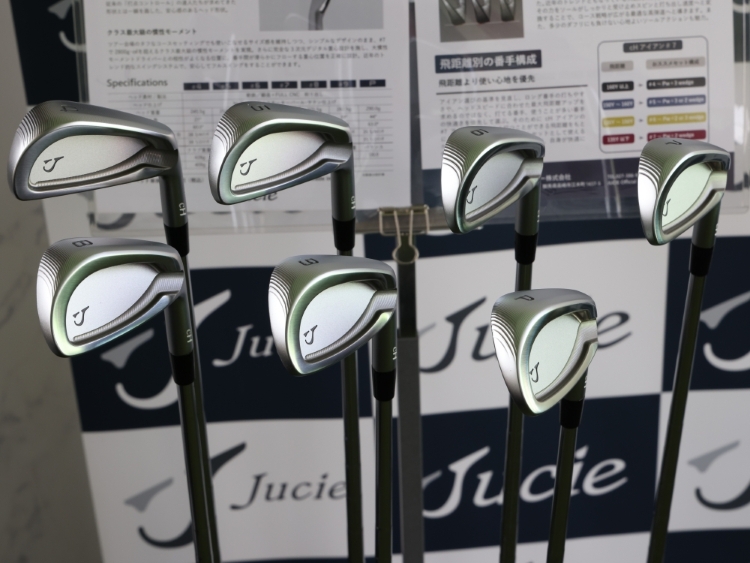
Following the release of information about the new cH Irons, they are now on sale.
Some of you may have already read the articles from the media launch event.
By the way, Mr. Matsuyoshi gave various explanations during the event, and I must say, his talks are always fascinating no matter how many times I hear them.
Even the media representatives, who were listening with some reserve at first, were completely engrossed by the middle of the presentation.
Some of you may have already tried them out or even used them in play. I’m sure those of you who have have your own unique impressions.
Since I’ve actually used these irons on the course, I’d like to focus on how they performed out there and give you a thorough impression of the cH irons.
I’m sure Mr. Matsuyoshi will continue to share plenty of details about the design and other technical aspects, so as usual, I’ll be sharing my personal experience from a user’s perspective.
On the course, it always exceeds expectations more than on the driving range.
Last time, I shared my impressions from testing it on the driving range; this time, I’ll share my experience using it on the course.
By the way, while this applies to all previous JUCIE models as well, I feel that JUCIE performs significantly better—both in terms of feel and results—when used on the course, on the grass, with course balls.
I guess it goes without saying since you’re using them on the course, but don’t you find that this happens surprisingly often?
You might think, “Oh, this might be good” at the driving range, but when you take it out to the course
you end up going, “Huh…?” Even though you took it out with high hopes, that feeling of disappointment is just too much.
By the way, among the JUCIE clubs, the tT Wedge’s S Sole is the one that completely transforms the feel when you hit it on the grass. It’s the perfect example of this.
To be honest, you can hardly tell how good it is on the mats at the driving range…
But when you hit it on the grass,
it changes so much that you’ll think, “Wait, this is a totally different club!”
I’m absolutely head over heels for the S Sole.
If there are any S-Sole users reading this, I think you’ll probably get the idea.
The cH irons also really shine on the green
And while there isn’t quite the same gap as with the S sole, these cH irons also really showed their true potential on the green.
First, when addressing the ball.
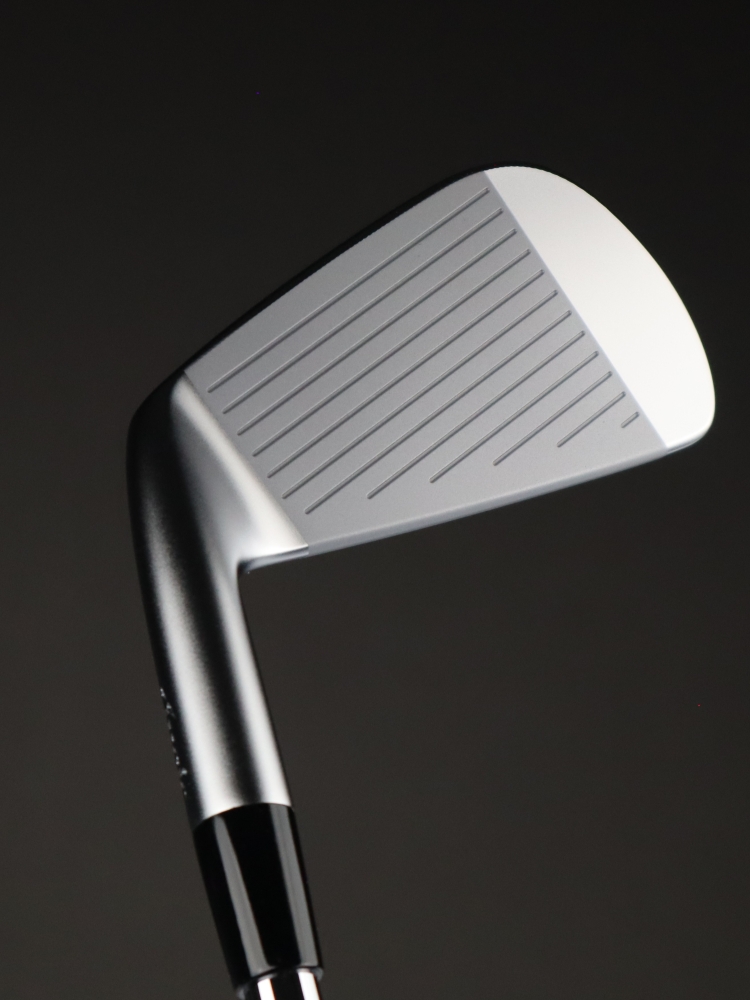
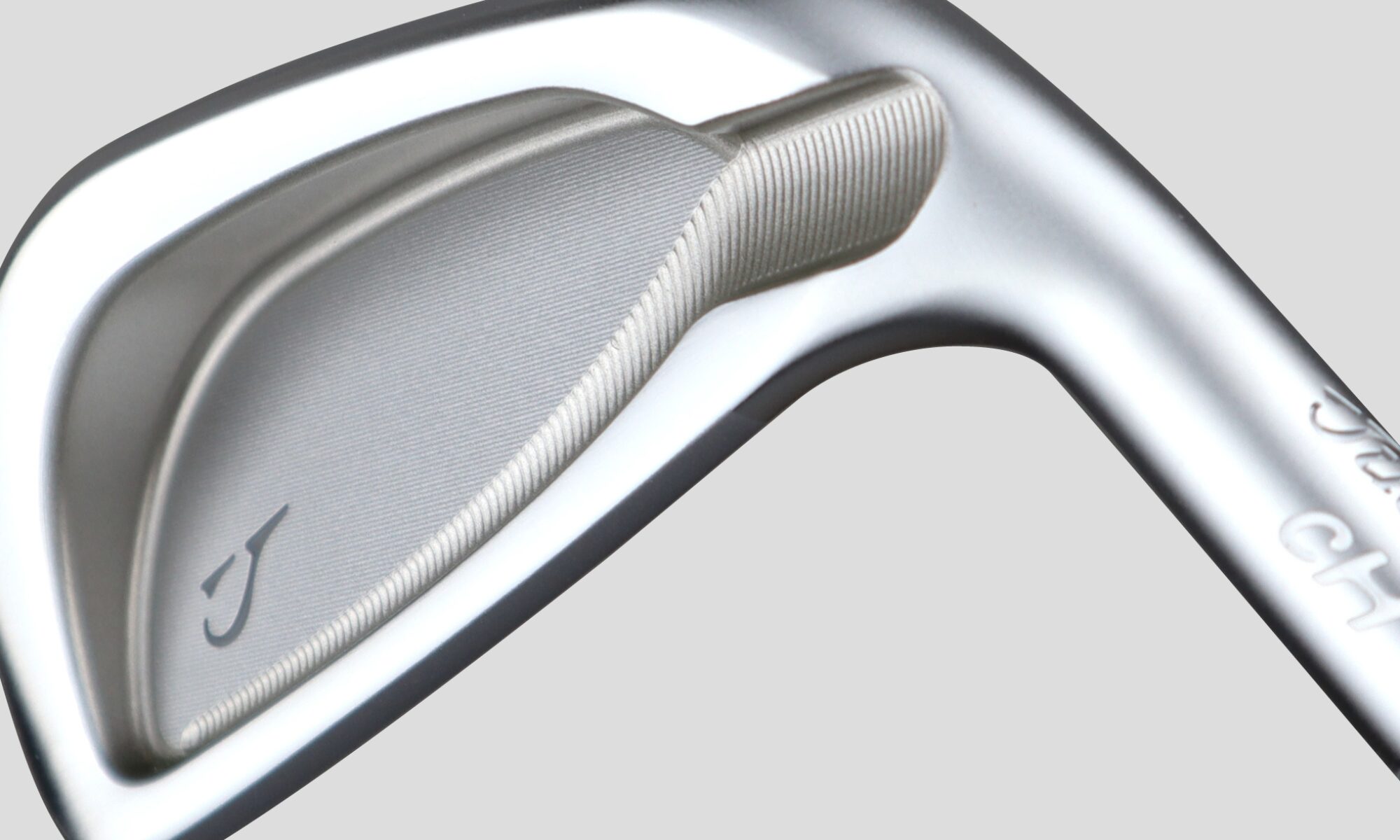
Compared to the tQ irons, these are significantly larger, and I think they feel substantial even when compared to other manufacturers’ models, including those with composite heads.
Yet, strangely enough, I got used to them almost immediately.
I wonder if this is due to the ingenuity of their meticulous design, or if this is simply the ideal size for a tour-level setup.
If anything, the distinctive protrusion at the toe gives me a tremendous sense of security.
As for the feel of the swing, there’s a distinct sensation of swinging a large clubface.
This was even more apparent on the course than it was at the driving range.
And the feel at impact is linked to this, giving you a sensation similar to striking the ball with the entire face of the club.
This is where it differs significantly from the tQ irons,
If the tQ offers the thrill of a “point” when you make solid contact,
the cH provides the comfort of a racket that makes contact with a “surface.”
That’s how you can really feel the difference in their character.
The ball flight and distance are really nice, and it just flies.
The way the ball flies and the distance it achieves gave me the same impression I had when I tried them at the driving range.
Compared to my previous irons, the ball launches a little lower and then glides forward with spin.
Distance varies by club, but generally, I was hitting about 10 yards farther.
I don’t think it’s necessarily better just to hit the ball as far as possible, but it’s really a relief when it simply flies well.
Because of its high moment of inertia, one of the defining characteristics of the
cH irons is its high moment of inertia.
Perhaps due to this, there were several instances where, if I started the downswing with a slight sweeping motion that caused the clubface to open, the ball tended to drift right.
I feel that this club’s performance isn’t well-suited to a swing where the clubface remains open during the backswing or downswing.
On the flip side, maybe that’s just the modern way to use this club.
If I swing with the feeling that the position I set up during the takeaway simply returns to its original state, the club responds very naturally.
In my case, just by being slightly more conscious of how I bring the club down right before impact, my game improved dramatically.
Furthermore, when I tried swinging my driver shot with that same mindset, even my driver improved! Thank you, cH irons... lol.
A problem arose
Since I wanted to compare them with the tQ irons that day, I tried using the tQ irons partway through.
The cH irons feel so comfortable to use that
I thought, “I might not be able to hit anything but the cH irons anymore…?” But I was wrong.
The feeling of hitting the sweet spot on the tQ irons, the solid feedback from the ball in my hands, and how easy the clubhead is to swing.
I don’t know why… even though I was using these irons just the other day, I already miss them so much…
Using the cH irons really highlighted the difference in character compared to the tQ irons, and it made me appreciate the tQ irons all over again.
I guess people really do get used to luxury.
So, what should I do? I want to use both...
I can’t exactly pack two sets of irons in my golf bag...
In conclusion,
I feel that the cH irons have broadened their target audience significantly.
There’s no doubt that this is a model that a wide range of players will enjoy using.
Its performance will likely vary considerably depending on the shaft you choose.
I’d like to come up with a way to gather your feedback someday.