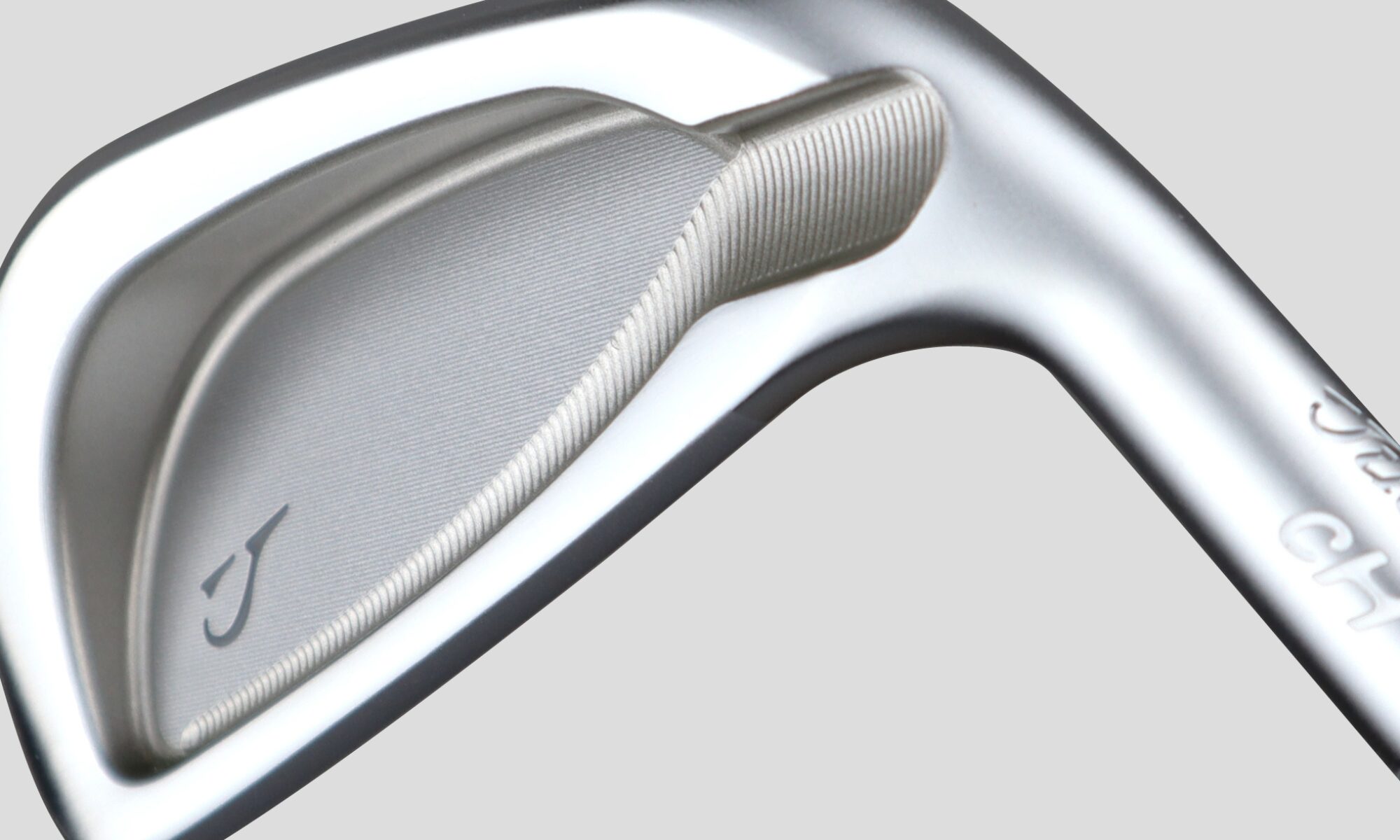

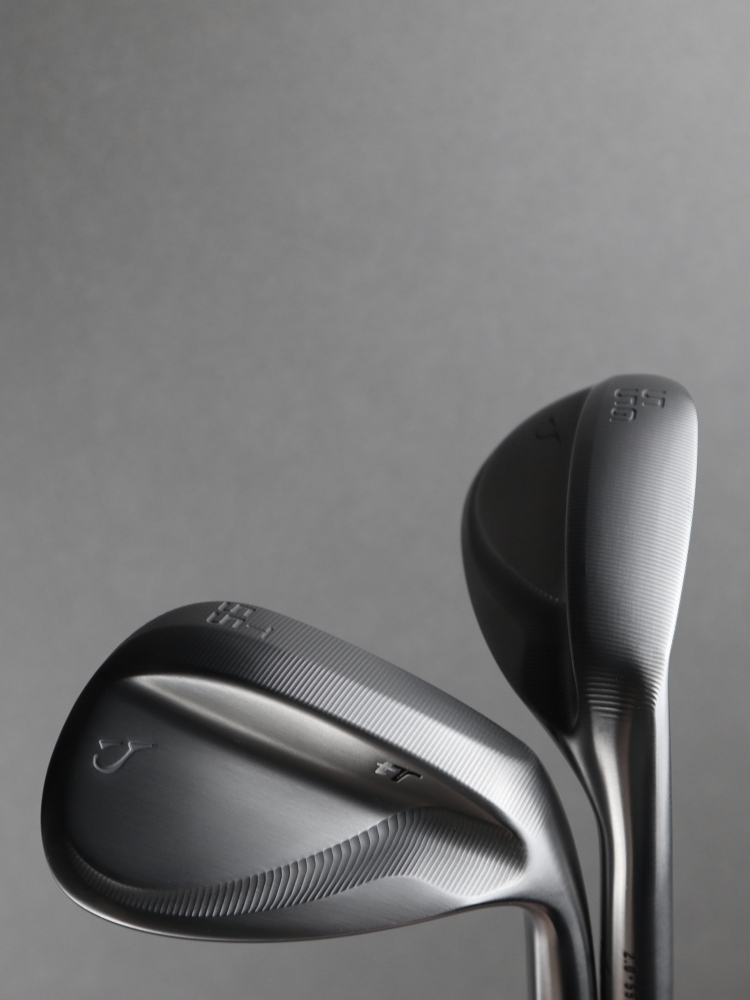
In the last issue, we talked about how you should focus not on absolute spin performance, but on "does it always produce the spin you expect?" I would like to talk about another uncomfortable point: "It is a waste of time to choose a wedge by giving priority to the value of the angle of the stance.
This time, I would like to talk about another uncomfortable point, which is that it is a waste of time to select wedges by giving priority to the value of the angle of the stance.
Is low-vance wedge difficult?
When was the low-vance wedge genre established...
When wedges were commonly included in iron sets, the Sw was a helpful club that was easy to use in bunkers, and when the trend toward strong lofts began to progress and the loft of the Pw was in the 40-degree range, clubs called the Then, clubs called W, Aw, Gw, P/S, etc. appeared between Pw and Sw, and simply the performance to fill the distance difference between Pw and Sw came to be demanded. After that, I feel that the clubs gradually evolved and changed into clubs specializing in handling bad lies close to Sw and clubs specializing in approach performance that can easily carve out a pitch of distance more than Pw.
Further changes occurred, and wedges were created as a series of wedges only, and even as a series of wedges with loft notation instead of number notation, the so-called single-piece wedge as we know it today.
Until then, wedges were all clubs that specialized in helping functions, such as clubs that specialized in getting out of bunkers or clubs that specialized in rolling, as typified by chippers.
It was professional golfers who actively adopted these single-purpose wedges, and they were transformed into various types of performance to meet the demands of various players. A major element of this change was mainly in sole performance, with clubs being created to suit those who used the sole aggressively and those who preferred a sole that did not get in the way at various angles of incidence.
The high-spin wedge was the first to appear on the scene. These high-spin wedges, depending on the sharpness of the scoreline and the performance of the ball at the time, were compatible with those with a strong sole performance, so the number of models with a strong vance effect increased. The early low-vance wedges were created for professionals who did not follow this trend and preferred a model with a weak vance effect that made it easier to hit a variety of shots rather than spin performance.
And because the people who used these low-vance wedges were skilled in wedge work at the time, wedges that incorporated their opinions often had sharp performance, and as a result, the impression that low-vance wedges were difficult became firmly established.
Low Vance ≠ Smaller Vance Angle
So what does low-vance mean in the first place?
I would describe it as having a "low-vance effect". I don't simply say that the angle of the vance is small. However, it is commonly accepted that they are synonymous in the current wedge selection process.
It is a bit difficult to describe, but it is a "one dimensional" view to evaluate the strength of the Vance effect only in terms of the Vance angle. The angle is ambiguous in terms of what it is in relation to, and in the end it is judged by whether it is too much or too little. In the end, we end up judging the angle based on whether it is too much or too little. Since we cannot reach the original performance in this way, I would like you to at least imagine the cross-section of the wedge and judge its wedge-shaped condition from a "two-dimensional" perspective.
By looking at the cross section, we can determine the difference in width and thickness of the sole, whether the sole is flat or round, and whether the ground contact position is in front or behind. Furthermore, is the contact position front or back? The angle of the sole is also important. The angle, for example, you can see that the wedge angle is the same for a loft of 56 degrees with 8 degrees of advance and for a loft of 60 degrees with 12 degrees of advance.
Even though it may be difficult to understand how these performances affect the effect at first, by being aware of them, you will gradually be able to see the conditions that suit your own hitting style.
To further understand this, I think it is important to take a "three dimensional" view that takes into account the changes in shape in the toe and heel directions. If we look at the rounding of the sole in this direction and the change when the wedge is opened, we will be able to see more of the wedge's true performance.
And beyond that, I value the "4-dimensional" view in my designs. I would like to talk about this in the next issue.
Thoughts on the Juicy Wedge lineup
As I mentioned, the Juicy wedge series was created with these various performances in mind, and even just looking at the 58-degree wedges, there are five types: B, S, K, G, and T, each with its own unique performance. In particular, the B, S, and K wedges all have a 10-degree angle of incidence. If you choose them by angle, they are all the same, but S has the weakest valance effect, B is standard, and K is slightly stronger, and if you hit the ball, you will feel it immediately.
T sole has a special valance effect, which aims to increase the amount of spin at close distances in a stable manner. It has a good vance effect and a moderate vance effect when it is open.
And as for the G sole, the angle is 8 degrees, but the vance effect is about the same as the B sole, and furthermore, the roundness is adjusted slightly so that the same vance effect is exhibited as much as possible whether the wedge is used straight or open. Furthermore, when evolving the wedge as tT Wedge 2.0, we have slightly strengthened the vance effect to the same level as that of the K sole. Therefore, we hope that our customers will abandon their preconceived notions of "because it has an 8-degree angle" or "because it has a low-vance" and feel that we want them to choose not based on the numerical value of the vance angle, but rather on the index of how effectively the sole functions for the shots they want to hit.