
Hello, this is tK, the blog administrator.
This blog post provides a follow-up on JUCIE's new iron series.
From readers of the previous article,
we have received several inquiries at JUCIE asking, 'What exactly is Reiwa Ikemen!?'
...Indeed. It's far from over.
Since then, I have been making frequent reconnaissance trips to Mr. Matsuyoshi, gathering 'fragments of information' piece by piece.
This time, I will share a follow-up report, limited to the information I have been authorized to disclose.
'Reiwa Ikemen' and 'Orthodox'
What particularly captures attention, of course, is...
As previously announced, JUCIE's upcoming new iron series will feature:
• Orthodox
• Reiwa Ikemen
Models embodying these two distinct design philosophies are slated for simultaneous release.
Now, to the main point.
Inevitably, the 'Reiwa Ikemen' model is what truly piques curiosity.
To be frank, when I first heard this term, my initial reaction was, 'Oh, really...?' (laughs).
However, the more I delved into the details, the clearer it became that this is not merely a catchy name,
but a project with extraordinarily ambitious objectives.
The Evolution of Irons Features 'Pivotal Models'
During my discussion with Mr. Matsuyoshi, the term emerged:
'Game Changer,' a phrase imbued with significant strategic intent.
Reflecting on the history of irons,
there have been several models that marked a distinct shift in design philosophy.
Which manufacturer, at what juncture, transitioned to which design ideology?
Those who have enjoyed golf clubs for an extended period
might possess a more intuitive understanding of these shifts than I do.
The 'Reiwa Ikemen' is reportedly being developed to follow this trajectory, aiming to become the 'next game changer' in the Reiwa era.
...While stated casually, this is, in fact, a remarkably ambitious undertaking.
Technical Fragmentary Information
Specifically, one point highlighted was the moment of inertia value.
Despite being a one-piece soft iron forging,
• The 7-iron boasts a moment of inertia of approximately 2800 g·cm² (among the largest for soft iron head sizes).
Individuals who immediately grasp the significance of this figure likely possess a profound dedication to golf equipment.
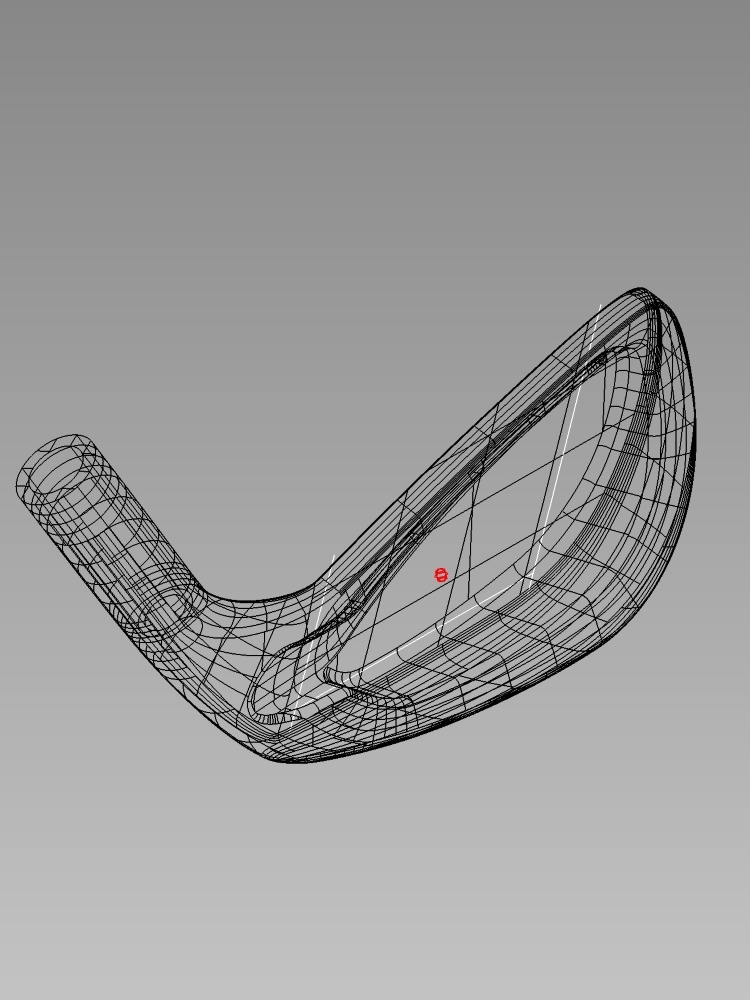
In recent years, advancements in 3D scanning technology have made it possible to replicate shapes with considerable accuracy.
Following JUCIE's product releases, various manufacturers have been closely observing Mr. Matsuyoshi's designs,
and frankly, they would likely imitate the shape almost immediately.
However, according to Mr. Matsuyoshi,
• Establishing a 'face' characteristic of Reiwa Ikemen
• Maintaining the same center of gravity design, a legacy from the tQ irons
Even if the shape could be replicated, imitating while simultaneously achieving both these objectives would be an almost impossible feat.
This aspect conveys a unique exclusivity to JUCIE, which is highly gratifying for enthusiasts.
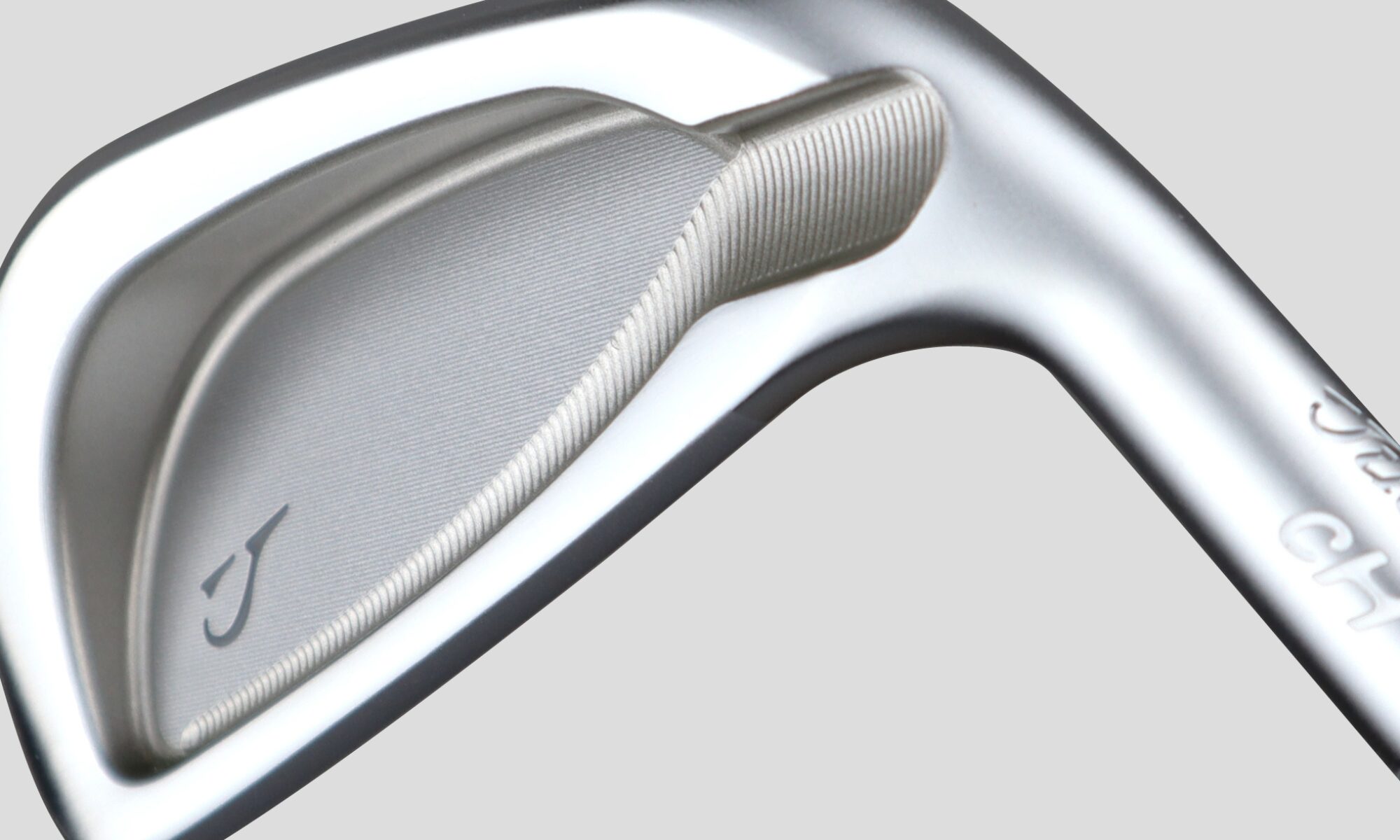
The shape features a cavity back design.
However, I perceived a subtle distinction from what is typically referred to as a 'forgiving cavity back.'
The Most Unexpected Aspect: 'Loft Settings'
Furthermore,
what truly surprised me this time was the loft setting.
• Reiwa Ikemen: 31° for the 7-iron
• Orthodox: 29° for the 7-iron
I had anticipated the complete opposite.
This configuration, it is explained, naturally arises when considering the club delivery method and the profile of a tour player utilizing it. Consequently, these two models not only possess:
• Distinct aesthetics
• Different characteristics
but also feature a distinctly different 'impact methodology.'
While aesthetic appeal serves as an initial selection criterion, the ultimate choice of model is determined by 'how one intends to strike the ball.'
I found this approach to be analogous to the selection process for wedge sole designs.
Game Changers Are Initially Met with Skepticism
A remark Mr. Matsuyoshi casually made left a lasting impression on me.
Models that become game changers,
regardless of the era, are not immediately embraced.
However, before long, they become the 'new standard.'
The 'Reiwa Ikemen' will likely elicit both praise and criticism. But that is acceptable.
JUCIE undertakes such pioneering projects.
Mr. Matsuyoshi, as he spoke, wore a subtly amused expression.
Development Progress
The demo heads, initially anticipated by the end of last year,
are still undergoing refinement due to the intricate milling process, and have not yet reached their satisfactory final form.
The more I learned, the more my desire grew: 'I want to see it soon!' 'I want to hit it soon!!'
Frankly, I returned with an almost agonizing anticipation.
Nevertheless, there is an expectation of being able to experience the actual product in the not-too-distant future,
so this excitement is likely to persist for a while longer.
Further Updates to Follow
While this update does not reveal the complete picture, the contours are gradually becoming clearer.
We will provide further updates as soon as new information becomes available.
Next time, we may be able to delve into more in-depth discussions.
Please continue to follow our progress.